Technical Articles
This note explains contactor selection for motors with long starting time. The note has been divided into three parts for easy understanding of the concepts involved. They are as given follows,
A motor generally drives a load through some transmission system. During start, the motor draws a high starting current or inrush current.
This current is about 6-8 times the motor rated current and can cause a significant voltage drop. This voltage fluctuation affects other devices connected to the same supply. Hence several other strategies are employed for starting motors to reduce its starting current; the most commonly employed being the Star—Delta starting.The starting value of the current is independent of the load attached; however it must be sufficient to overcome the inertia of the motor load system. However, inertia of the load impacts the starting time of the motor as explained in the next part. As the motor accelerates and nears its rated speed, the current gradually reduces and settles down to a value equal to motor rated current or less depending on the actual load connected. The typical torquespeed characteristics of an induction motor are as given alongside.

The total time from rest till the motor draws its rated current is called the starting time. The starting time of the motor is a function of the load inertia, load speed and the starting torque developed by the motor. A high inertia load requires an extended time to reach full speed and hence the motor also draws high starting current for a long time. The motor starting time is specified by the manufacturer in the motor data sheet. Since motor starting time is also a function of applied voltage it differs for different starting methods. For example starting time of the motor with Direct-Online starting would be different than with Star-Delta starting.
The starting line current in Star Delta configuration is 1/3rd of the starting current of the same motor in DOL configuration. However applied voltage and therefore starting torque also reduces, leading to higher starting time.
Typical applications involving motors with a high starting time are,
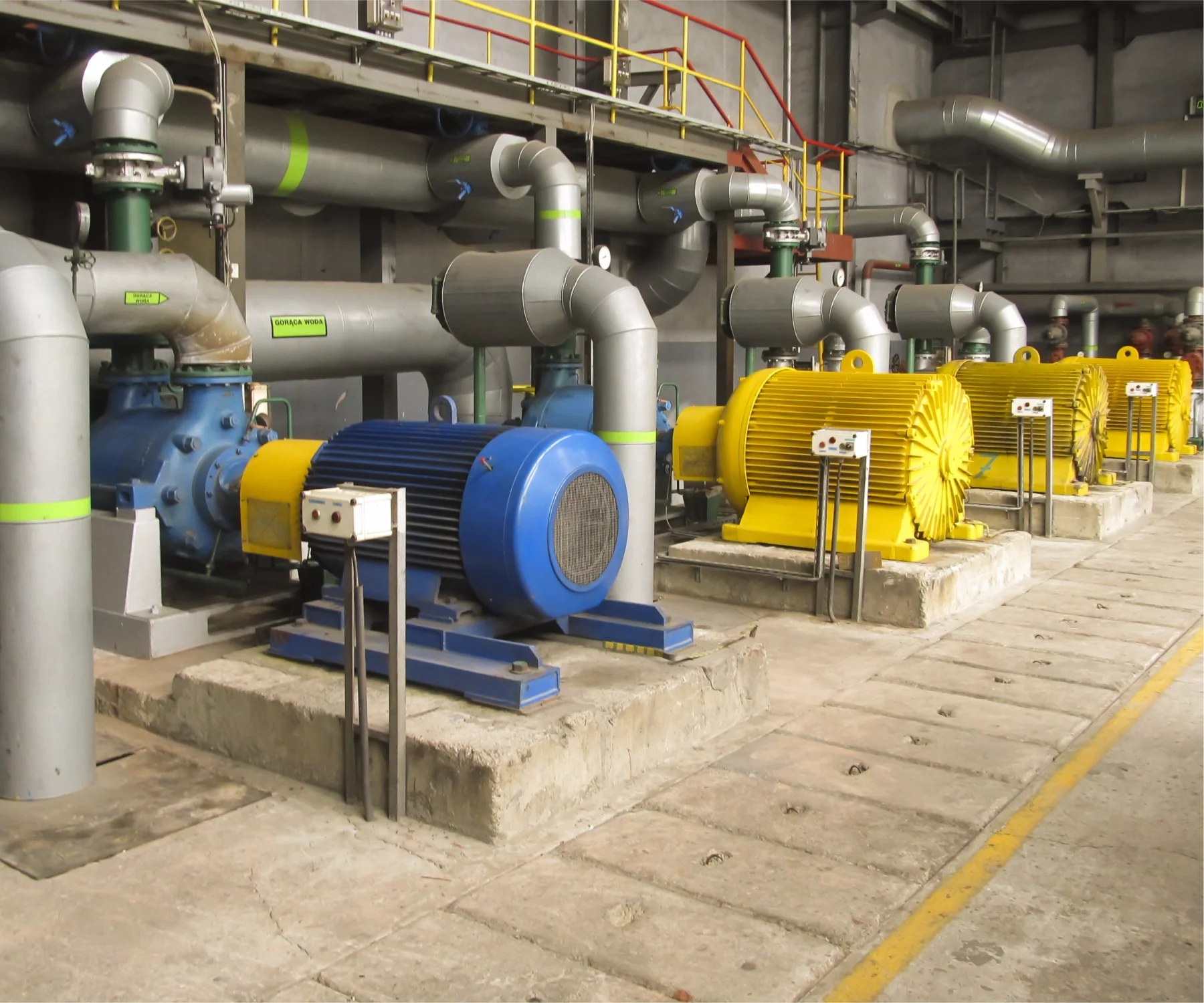
ID and FD fans have a high inertia and hence motors required to drive them will have a long starting time. As a result the motor will draw high inrush current for an extended period of time.
The high inrush current drawn by the motor at start is carried by the contactors that are used for switching. Since, this current flows for an extended period of time, the contactor needs to be selected judiciously. Guidelines for selection of contactor rating is as follows

Contactors are selected based on their overload current Motor specifications withstand capability. Overload withstand capability is defined Motor kW Rating: 1 60 kW in 'EC 60947-4-1 as given below,
| Rated Operational Current le (AC3) | Test Current | Duration of Test |
|---|---|---|
| ≤ 630 A | 8 × Ie max / AC-3 | 10 sec |
| > 630 A | 6 × Ie max / AC-3* | 10 sec |
It means that a contactor with rated operational current equal to or less than 630A can withstand 8 times its rated AC3 operational current for a period of 10 seconds. This rating is also called as the 10 sec rating of the contactors.
For Example:
Now let us look at an example, how to arrive at minimum AC3
Ratings of the Star, Main and Delta contactors
Motor kW Rating: 160 kW
Motor Full Load Line Current: 304A
Motor Starting time in Star-Delta: 85 sec
Delta contactor can be directly selected as per type 2 chart specified by the contactor manufacturer. This is because delta contactor is connected only when the motor has reached near its rated speed and motor current has reduced to its full load value
A general schematic of Star-Delta starter is shown below,

Starting current in a normal delta motor with DOL starting is around 6-8 times the motor full load current. However in Star-Delta starter motor starting current in star is reduced to 1/3rd of this value. Typically starting current when using Star-Delta starting method is around 2.2 times motor full load current.
Starting current (Is) = 2.2 x motor full load current
= 2.2 x 304 = 669A
Starting time (Ts) = 85 sec
Therefore, (Is) x2 (T)s = 669 x 669 x 85 ..(A)
Now, Value (A) must be less than the contactor withstand capacity. i.e.,
Based on IEC 60947-4-1,
Contactor Withstand Capacity = (8 I (AC3) x 10 ..(B)
It is required that, B > A

Solving the above equation: le(AC3) 2 243.8
The contactor must be selected such that its rated AC-3 current le satisfies the above condition.
Therefore in this case MNX 265 can be selected for Star & Main Contactor.
The rating thus arrived at should be compared with the rating of the contactor as given in Type2 Chart, and The higher rating of the two shall be selected
For e.g. In this case, the start and Main contactor rating as given in fused Type 2 chart for 160 kW motor is MNX 140 for Star and Main is MNX 185. Comparing this with the rating arrived at earlier, which is MNX 265, the correct selection will be to use MNX 265
In case of a 160 kW motor with normal starting time (<10 sec) the selection of contactors according to type 2 charts is:
Star Contactor: MNX 140
Main and Delta Contactor: MNX 185
However for the same 160 kW motor with long starting time (85 sec in this case) the contactor selection is:
Star Contactor: MNX 265
Main Contactor: MNX 265
Delta Contactor: MNX 185

Sandeep Pawar,
General Manager - Product ManagementElectrical Engineer with over 20 years of experience in Product Management and Application Engineering for Protection Relays, Power Quality Solutions, and Intelligent Motor Control Centres (MCCs). Possesses strong expertise in LV and MV power system protection schemes, motor protection, monitoring, and control applications. Well-versed in both conventional and intelligent motor management systems, with extensive knowledge of protection, control, and condition monitoring solutions.
Assistance Required?
Select an option to Contact Us

 Contact Us

