Technical Articles
Electrical systems today are expected to deliver more than just power. They must provide visibility, efficiency, stability, and actionable data. Whether it is an industrial facility, a commercial complex, or a utility network, monitoring electrical parameters has become essential rather than optional.
This growing need for intelligent measurement brings us to a key device used across modern installations, the multifunction meter.
Many professionals still ask fundamental questions such as what is multifunction meter, how it operates, and why it is so widely used. Let’s explore this in a practical and structured way.
Starting with the basics, the mfm full form in electrical systems is Multi-Function Meter.
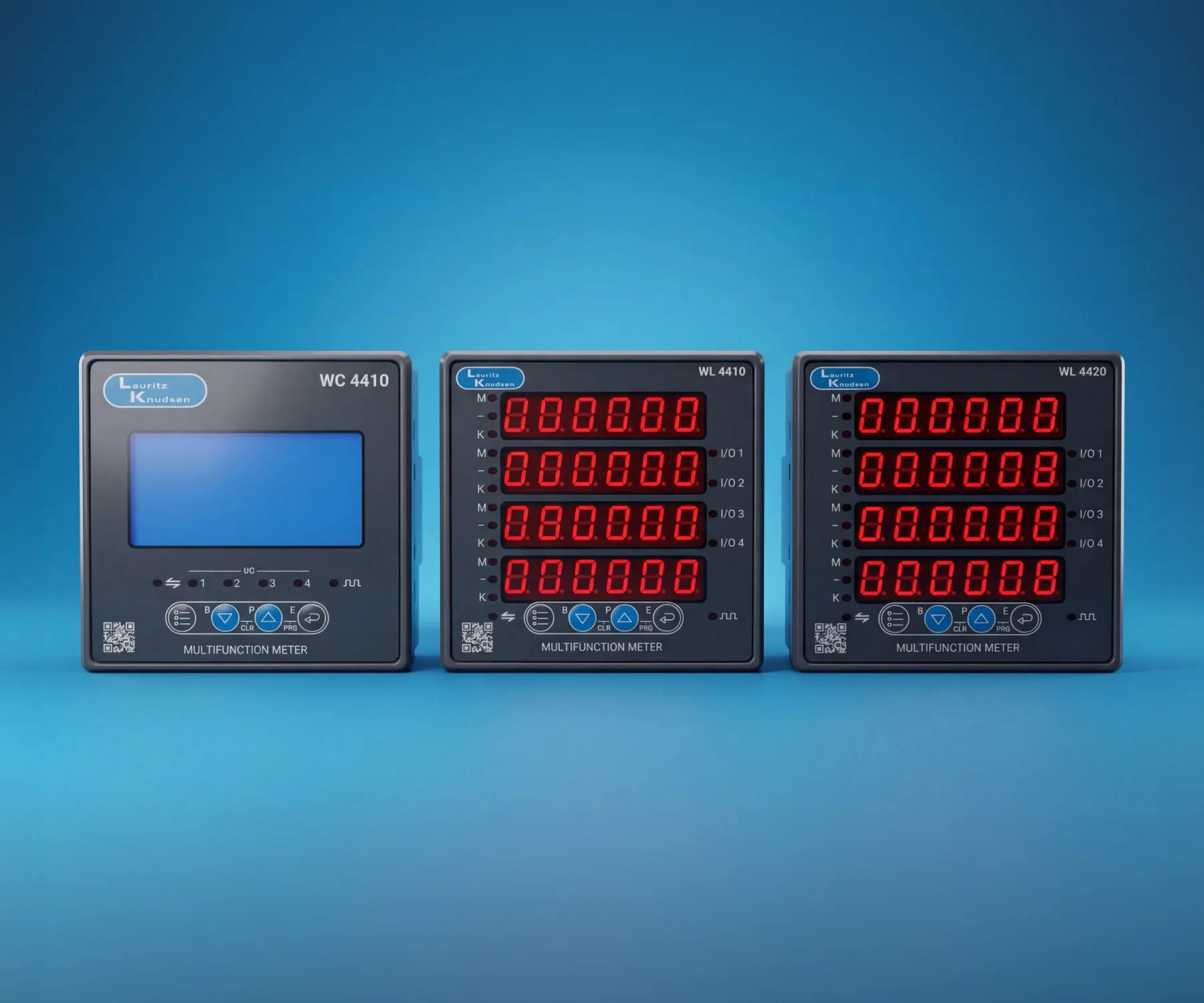
An MFM is an advanced digital measurement device designed to monitor multiple electrical parameters within a single unit. Instead of using separate instruments for voltage, current, power, and energy readings, a multifunction meter combines all these functions.
This consolidation makes the device highly valuable in space-constrained panels and complex electrical networks.
To understand what is multifunction meter, think of it as the central observation point of an electrical system.
A multifunction meter is a digital instrument capable of measuring, displaying, and sometimes communicating multiple electrical quantities. These typically include:
Instead of fragmented monitoring, operators gain a unified view of system behaviour.
Electrical networks constantly face variations in load, supply quality, and operating conditions. Without measurement, diagnosing inefficiencies or abnormalities becomes guesswork.
Multifunction meters enable:
What this really means is better decision-making based on data rather than assumptions.
The multifunction meter working principle is rooted in electrical sensing and digital processing.
At a functional level, the meter performs three major actions:
Incoming electrical signals are sampled through measurement circuits. These signals are then converted into digital values and processed using internal algorithms.
The device calculates multiple parameters simultaneously from the measured inputs.
A common practical question is how does multifunction meter work inside an installation.
The meter does not directly handle full system current or voltage. Instead, it works with scaled signals obtained through instrument transformers.
Operational flow typically involves:
This approach ensures accuracy while maintaining safety.
One of the defining strengths of a multifunction meter is its ability to measure multiple quantities from limited inputs.
Typical readings include:
Such comprehensive measurement would otherwise require several separate devices.
In many installations, the term multi-function panel meter is frequently used.
This refers to multifunction meters specifically designed for panel mounting. These units integrate seamlessly into electrical panels, switchboards, and distribution boards.
Their design priorities often include:
Panel integration improves accessibility and system organisation.
The popularity of multifunction meters is not accidental. Their benefits align directly with operational and design needs.
Major advantages include:
For engineers and panel builders, this translates into cleaner and more efficient designs.
Measurement accuracy is critical in electrical systems. Incorrect readings can lead to flawed decisions, billing disputes, or misdiagnosed issues.
The multifunction meter working principle ensures accuracy through:
Modern meters are designed to deliver stable and repeatable readings even under fluctuating conditions.
Many modern multifunction meters go beyond simple display functions. They act as data sources within larger monitoring systems.
Common communication capabilities:
These features allow operators to monitor systems without physical panel access.
Multifunction meters are used wherever detailed electrical monitoring is required.
Common application environments:
Each application benefits from consolidated and reliable parameter visibility.
Proper installation is essential for accurate measurement and device longevity.
Important aspects include:
Even small wiring errors can distort readings significantly.
Several misunderstandings often surface in discussions about these devices.
Multifunction meters generally require minimal maintenance, yet periodic checks remain important.
Typical inspection points:
Preventive checks help maintain measurement reliability.
Electrical systems without measurement tools operate in partial visibility. Multifunction meters close this gap by providing a detailed, consolidated view of system parameters.
Understanding what is a multifunction meter, its operating logic, and its practical benefits helps engineers, operators, and facility managers design smarter and monitor better. Over time, this visibility supports efficiency, stability, and informed decision-making across the electrical network.
A multi-function meter is a measurement instrument that shows without recording two or more electrical quantities in a single display. It is used for system monitoring and analysis with real-time data of voltage, current, power, frequency or energy.
The mfm full form in electrical measurement is Multi-Function Meter. The name comes from the fact that the device can do many different types of measurements at one time.
Instrument transformers supply scaled voltage and current inputs to the meter. The digitized signals are further processed to derive electrical quantities that can be used for displaying or transmitting to a monitoring system.
The principle of operation of the multifunction meter is radio signal sampling, A-D conversion and mathematics. The meter is programmed to process the measured inputs in a multiplying fashion in order to calculate a plurality of electrical values.
Yes. A multi-function panel meter is specifically designed for panel integration in industrial and commercial environments. These meters are built for durability, measurement accuracy, and system compatibility.
Assistance Required?
Select an option to Contact Us

 Contact Us

