Technical Articles
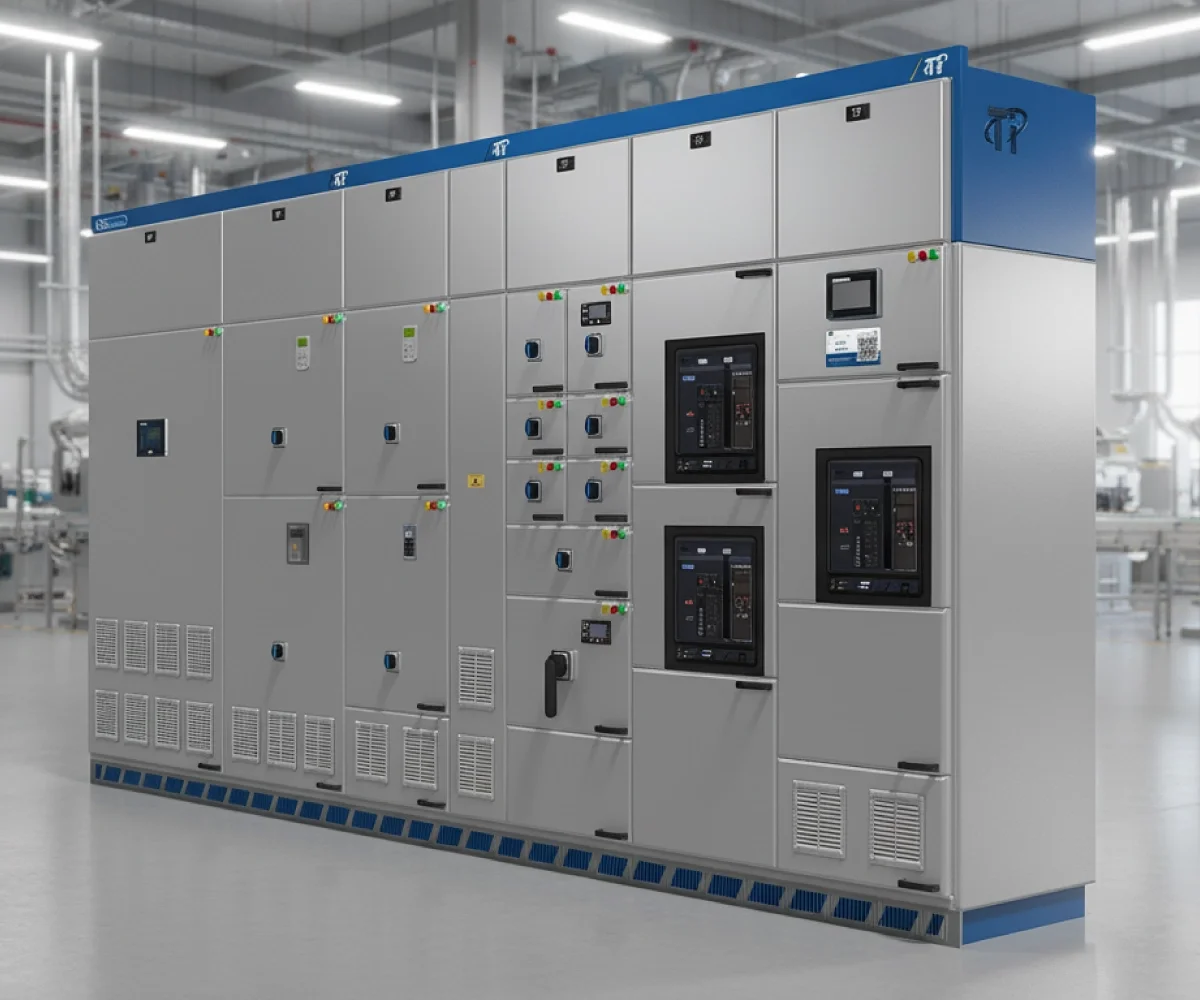
In industrial and commercial environments, electrical systems operate under relentless pressure where failure is not an option. A switchboard must do more than just distribute power; it must guarantee safety and uptime. Ti switchboards are engineered for this reality. They are built not just to carry a current, but to instill confidence. Every panel is the product of 70 years of dedicated experience with Indian industries, providing a foundation of proven safety, service continuity, and operational clarity.
At the heart of this discipline is IEC 61439. This is the global benchmark that transforms switchboards into silent guardians of your electrical systems. It provides an engineered shield against the tangible risks of short circuits, overheating, and structural failure.
This blog unpacks how the union of Ti switchboards and the IEC 61439 standard achieves more than compliance; it delivers absolute certainty. This is the assurance that your system will stand protected and resilient against any surge, giving you the professional peace of mind to focus on your operations while it performs its duty, unfazed.
IEC 61439 has replaced the earlier IEC 60439 standard, introducing a more structured and performance-based approach. The primary objectives of this standard are:
Safety: Ensuring the panel performs reliably under electrical, mechanical, and thermal stress.
Continuity of service: Preventing downtime due to equipment failure.
Customization and conformity: Meeting specific end-user application needs.
The standard fundamentally moves beyond outdated type-tested assemblies, focusing instead on comprehensive design verification. This rigorous process validates the assembly's construction, performance, and safety through a series of checks and tests. For manufacturers, this approach is a strategic advantage. It simplifies the manufacturing process, boosts operational reliability, and reduces the total cost of ownership for the end-user, building a foundation of trust through proven consistency.
To comply with IEC 61439 panels, Ti Panels must undergo a range of design and routine verifications. Each verification targets a specific aspect of the panel’s function, reliability, and safety.
Purpose: This test ensures the enclosure can withstand accidental mechanical shocks during operation or installation. The level of protection is graded using the IK code (carried out as perrelevant assembly standard).
Procedure:
Assessment:
Note: This test does not apply to low-voltage power switchgear assemblies like PSCs.
Purpose: Ensures that labels and identifiers on the panel remain legible over time.
Procedure:
Assessment:
The IEC 61439 framework is built around three core objectives: safety, continuity of service, and end-user conformity. Together, these pillars serve as the foundation for designing, testing, and verifying compliant Ti Panels.
Safety is at the heart of IEC 61439 panels. It ensures that the panel can perform under various electrical stresses without endangering personnel or property.
Verification:
Routine Checks:
Verification:
Routine Checks:
Verification:
Routine Checks:
Verification:
Routine Checks:
Verification:
Routine Checks:
Reliable service is just as important as safety. IEC 61439 panels standard mandates features and tests that reduce the risk of failure and ease maintenance.
Verification:
Routine Checks:
Verification:
Routine Checks:
Ti Panels should meet user-specific usability, environment, and physical installation requirements.
Design Requirements:
Verification:
Routine Checks:
Design Requirements:
Verification:
Routine Checks:
Design Requirements:
Verification:
Routine Checks:
Complying with the IEC 61439 standard is more than a regulatory requirement; it is a strategic commitment to operational success and absolute safety. This standard represents a fundamental reset, not just a revision. It marks a decisive shift from assumption to assurance, replacing outdated testing with rigorous design verification that reflects real-world performance and risks.
At Lauritz Knudsen, every Ti Panel is engineered on this foundation. Tested, trusted, and fully aligned with IEC 61439, our switchboards deliver resilience under pressure and safety without compromise.
When safety is the absolute priority in every detail, from design and execution to the daily heartbeat of your system, the only choice is the switchboard built to endure. Choose Ti.
Assistance Required?
Select an option to Contact Us
 Contact Us

