Technical Articles
Function of Anti-Pumping in Circuit Breaker is to prevent multiple breaker closures due to persistent closing command. For instance, if the operator gives a consistent closing command to the breaker by pressing the close button and the breaker closes. However, a fault in the system causes the breaker to trip. Since the close command is still in the pressed condition, there is a chance of the breaker closing again and being tripped by the release multiple times. This can severely damage the contacts and closing mechanism of the breaker.
Anti-pumping feature prevents this by ensuring that the breaker closes only once for one close command.
Anti-pumping prevents multiple breaker closures due to persistent closing commands. It prevents the breaker from reclosing in the event of faults in case there is a continuous closing command. This ensures reliability of the entire distribution system and protects the breaker from severe damage.
Following anti-pumping methods are used to ensure reliability of entire distribution system:

Mechanical anti pumping is achieved by providing linkage interlocks which ensures that anti-pumping lever does not reset until the manual persistent closing command is relieved. Even in case of a fault, breaker trips but the anti-pumping lever remains in the downward position until a persistent command is relieved. Hence the breaker can be reclosed only after a fresh command is given. It is available in all ACBs irrespective of Manual operation (MDO/MF type) or Electrical operation (EDO/EF type).

Closing command (“manual” or “electrical –through closing coil”) to mechanism closing shaft is given through an inclined component called anti pumping lever (APL). Breaker can be closed only when this APL is in UP condition (pic1). This happens when all the ‘Ready to close conditions’ are met. When in UP condition, ON command is transmitted through APL’s arm to closing shaft. However, when this component is in DOWN condition (pic2) breaker cannot be closed.
Persistently keeping the close push button in ON condition (continuous ON command), will not allow the APL to come in UP position. So, breaker will not close. Only when the close push button would be reset and fresh closing command will be given, the breaker will close. This explains the working of mechanical anti-pumping.
Electrical Anti-Pumping is available in all electrically operated ACBs (EDO/EF type). In case persistent closing command is given to the breaker from remote location (through closing release), function of Electrical anti pumping is to cut off the supply from closing release till the closing command is not reset and fresh closing command is given. This prevents the breaker from multiple closing operations due to continuous closing command. It can be achieved through the following methods:
To achieve this anti-pumping there is a need for an auxiliary contactor or a relay which will get actuated by the first closing command and will break the closing circuit and will prevent the breaker from closing after the breaker has tripped on fault, this anti-pumping contactor or relay is reset only when the closing command is removed, thus proving anti-pumping.
In OMEGA ACBs, closing release consists of an electronic circuit to ensure no watt loss, in spite of continuous power supply, thus saving energy. When a closing command is given, closing coil of the circuit breaker gets supply through an electronic circuit which comprises of IC555 timer. The closing coil is energized and the breaker closes. The closing command persists only for the 500ms time duration. In order to close the circuit breaker again, the closing coil circuit will have to be reset only when the closing command is removed.
This ensures that once the breaker has closed and tripped on fault the breaker can close again only after the first closing command is removed and a fresh closing command is given, thus providing anti-pumping feature.
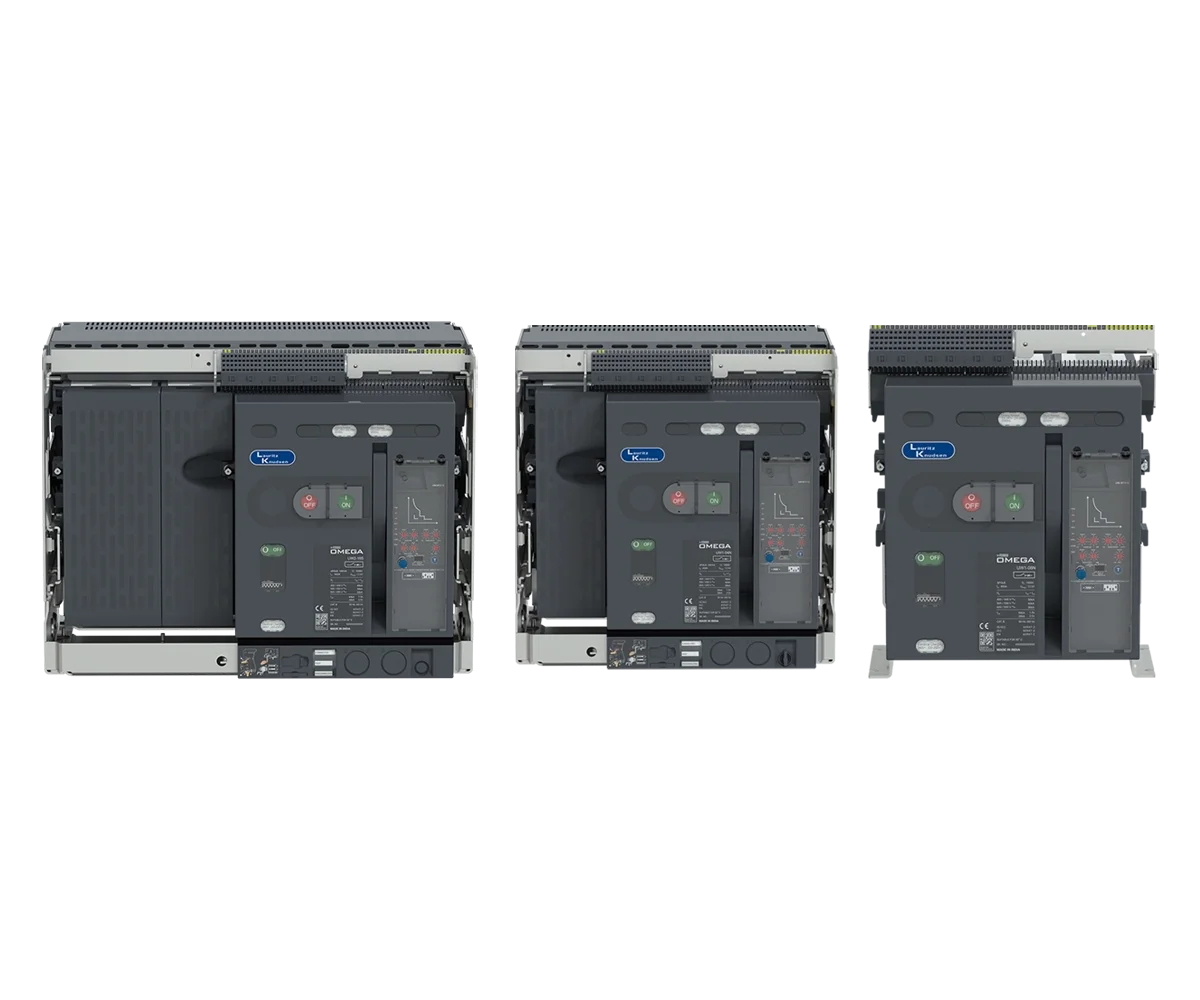
Omega ACBs have both inbuilt Mechanical anti-pumping (for all ACBs) and Electrical anti-Pumping (in case of electrically operated ACBs), thus providing complete fool-proof safety. Other makes of ACBs offer only mechanical anti-pumping as an in built feature. So, there is necessity for having an external anti pumping circuit/relay to achieve electrical anti pumping feature in their case.


Sourav Dasmodak,
Product Management & Marketing (Powergear - ACB)Product Owner of Air Circuit Breaker (ACB) of Lauritz Knudsen for Domestic & International Market. I can talk to you about Electrical Products' Sales, Business Development, Market Expansion, Cracking Critical Strategic Account, handling Key Account & of course how to develop & motivate Channels along with the organizational growth. Having near about one and a half decade of experience across the country with major electrical manufacturers (Top 4).
Assistance Required?
Select an option to Contact Us

 Contact Us

