Technical Articles
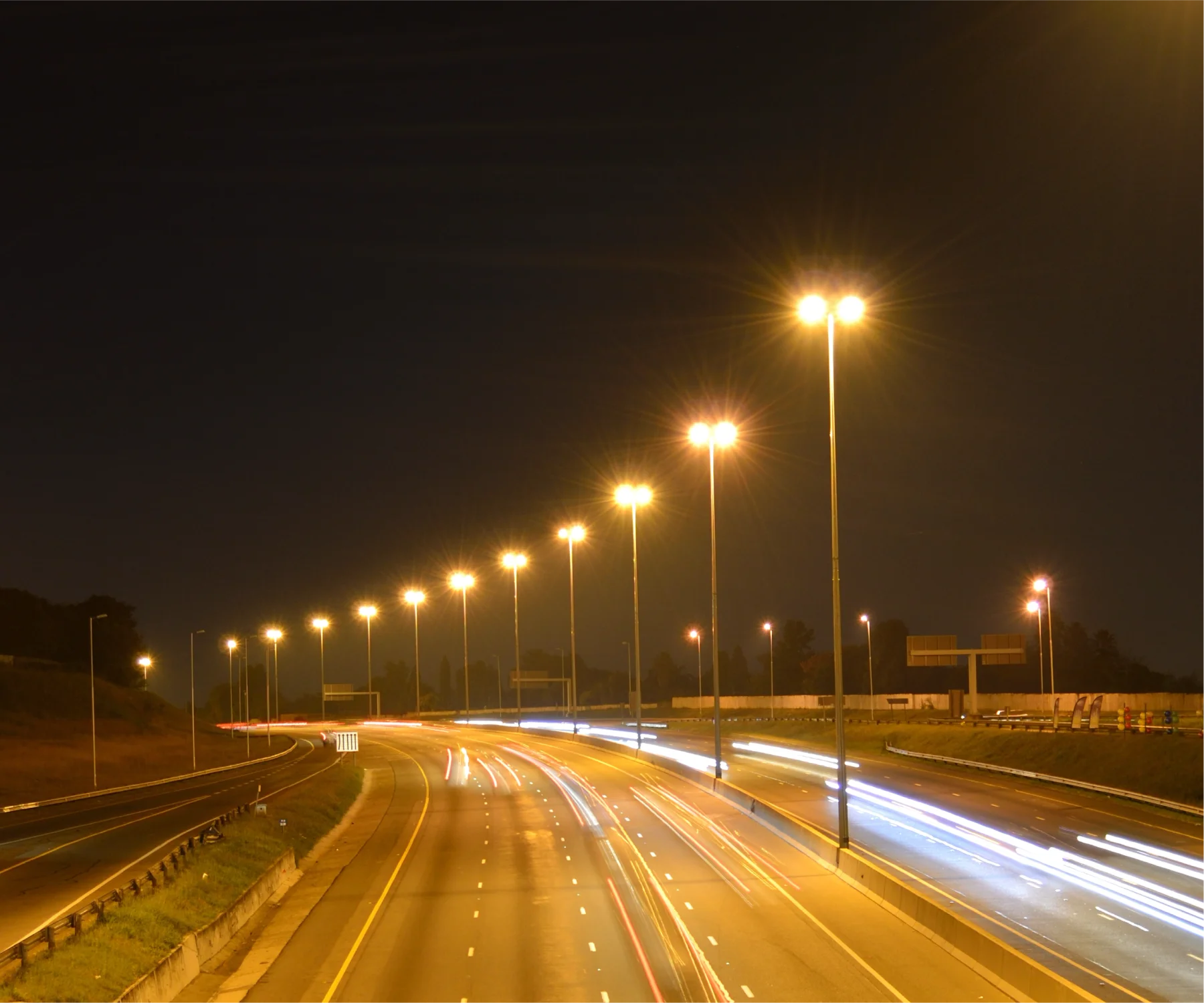
Today, street lighting commonly uses high intensity discharge lamps. The lamps generally used for street lighting and outdoor lighting are given below.
Out of these, high pressure sodium vapour lamps are the most ubiquitous for street lighting because they are the most efficient light source. HPSV lamps are preferred because even though it has low colour rendering, it is not a major requirement in street lighting applications. The comparison is shown in the annex.

Inrush current during switch ON due to charging of circuit capacitors: With the capacitor introduced in the supply circuit for power factor compensation, it draws a charging current during switching ON. The value of inrush current during switch ON of lamps is generally between 20-601n for a period less than 5 ms.
Preheating current: Before ignition in order to ionize the gas between the electrodes, the discharge lamp draws more current from the supply. This current (also known as starting current) generally ranges from 1.1 to 1.6 times the nominal current In for a period of 2-10 min.
According to IEC 60947-4-1: AC-5a, 5b Utilization category The operating conditions of lighting circuits have the following characteristics:
Based on:
Considerations:
A) Selection chart for HPSV lamps 240V, 50 Hz with power factor compensation Utilization category AC-5a
| Lamp characteristics | Rating (W) | 50 | 70 | 100 | 150 | 250 | 400 | 700 | 1000 | |
| Total power (Including ballast power) | 62.5 | 87.5 | 125 | 187.5 | 312.5 | 500 | 875 | 1250 | ||
| Starting (preheating) current (A) | 0.40 | 0.55 | 0.79 | 1.19 | 1.98 | 3.17 | 5.55 | 7.93 | ||
| Running current (A) | 0.28 | 0.40 | 0.57 | 0.85 | 1.42 | 2.26 | 3.96 | 5.66 | ||
| Capacitance value required for compensation | 6.8 | 10 | 15 | 22 | 33 | 68 | 100 | 150 | ||
| Max no. of lamps per phase | MO 9 (qty) | 9 | 32 | 23 | 16 | 11 | 6 | 4 | 2 | 2 |
| MO 12 (qty) | 12 | 42 | 30 | 21 | 14 | 8 | 5 | 3 | 2 | |
| MO 18 (qty) | 18 | 63 | 45 | 32 | 21 | 13 | 8 | 5 | 3 | |
| MO 25 (qty) | 25 | 88 | 63 | 44 | 29 | 18 | 11 | 6 | 4 | |
| MO 32 (qty) | 32 | 113 | 81 | 56 | 38 | 23 | 14 | 8 | 6 | |
| MO 40 (qty) | 40 | 141 | 101 | 71 | 47 | 28 | 18 | 10 | 7 | |
| MO 45 (qty) | 45 | 159 | 113 | 79 | 53 | 32 | 20 | 11 | 8 | |
| MO 50 (qty) | 50 | 176 | 126 | 88 | 59 | 35 | 22 | 13 | 9 | |
| MO 60 (qty) | 60 | 212 | 151 | 106 | 71 | 42 | 26 | 15 | 11 | |
| MO 70 (qty) | 70 | 247 | 176 | 123 | 82 | 49 | 31 | 18 | 12 | |
| MO 80 (qty) | 80 | 282 | 202 | 141 | 94 | 56 | 35 | 20 | 14 | |
| MO 95 (qty) | 95 | 335 | 239 | 168 | 112 | 67 | 42 | 24 | 17 | |
| MO 110 (qty) | 110 | 388 | 277 | 194 | 129 | 78 | 48 | 28 | 19 | |
| MO 140 (qty) | 140 | 494 | 353 | 247 | 165 | 99 | 62 | 35 | 25 | |
| MO 185 (qty) | 185 | 652 | 466 | 326 | 217 | 130 | 82 | 47 | 33 | |
| MO 225 (qty) | 225 | 794 | 567 | 397 | 265 | 159 | 99 | 57 | 40 | |
| MO 250 (qty) | 250 | 882 | 630 | 441 | 294 | 176 | 110 | 63 | 44 | |
| MO 300 (qty) | 300 | 1058 | 756 | 529 | 353 | 212 | 132 | 76 | 53 | |
B) Selection chart for HPSV lamps 240V, 50 Hz with power factor compensation Utilization category AC-5a
| Lamp characteristics | Rating (W) | 50 | 70 | 100 | 150 | 250 | 400 | 700 | 1000 | |
| Total power (Including ballast power) | 62.5 | 87.5 | 125 | 187.5 | 312.5 | 500 | 875 | 1250 | ||
| Starting (Preheating) current (A) | 0.91 | 1.28 | 1.82 | 2.73 | 4.56 | 7.29 | 12.76 | 18.23 | ||
| Running current (A) | AC3 | 0.65 | 0.91 | 1.30 | 1.95 | 3.26 | 5.21 | 9.11 | 13.02 | |
| Max no. of lamps per phase | MO 9 (qty) | 9 | 14 | 10 | 7 | 5 | 3 | 2 | 1 | 1 |
| MO 12 (qty) | 12 | 18 | 13 | 9 | 6 | 3 | 2 | 1 | 1 | |
| MO 18 (qty) | 18 | 28 | 20 | 14 | 9 | 6 | 3 | 2 | 1 | |
| MO 25 (qty) | 25 | 38 | 27 | 19 | 13 | 8 | 5 | 3 | 2 | |
| MO 32 (qty) | 32 | 49 | 35 | 25 | 16 | 10 | 6 | 4 | 2 | |
| MO 40 (qty) | 40 | 61 | 44 | 31 | 20 | 12 | 8 | 4 | 3 | |
| MO 45 (qty) | 45 | 69 | 49 | 35 | 23 | 14 | 9 | 5 | 3 | |
| MO 50 (qty) | 50 | 77 | 55 | 38 | 26 | 15 | 10 | 5 | 4 | |
| MO 60 (qty) | 60 | 92 | 66 | 46 | 31 | 18 | 12 | 7 | 5 | |
| MO 70 (qty) | 70 | 107 | 77 | 54 | 36 | 21 | 13 | 8 | 5 | |
| MO 80 (qty) | 80 | 123 | 88 | 61 | 41 | 25 | 15 | 9 | 6 | |
| MO 95 (qty) | 95 | 146 | 104 | 73 | 49 | 29 | 18 | 10 | 7 | |
| MO 110 (qty) | 110 | 169 | 120 | 84 | 56 | 34 | 21 | 12 | 8 | |
| MO 140 (qty) | 140 | 215 | 153 | 107 | 72 | 43 | 27 | 15 | 11 | |
| MO 185 (qty) | 185 | 284 | 203 | 142 | 95 | 57 | 35 | 20 | 14 | |
| MO 225 (qty) | 225 | 345 | 246 | 173 | 115 | 69 | 43 | 25 | 17 | |
| MO 250 (qty) | 250 | 383 | 274 | 192 | 128 | 77 | 48 | 27 | 19 | |
| MO 300 (qty) | 300 | 460 | 329 | 230 | 153 | 92 | 58 | 33 | 23 | |

Sandeep Pawar,
General Manager - Product ManagementElectrical Engineer with over 20 years of experience in Product Management and Application Engineering for Protection Relays, Power Quality Solutions, and Intelligent Motor Control Centres (MCCs). Possesses strong expertise in LV and MV power system protection schemes, motor protection, monitoring, and control applications. Well-versed in both conventional and intelligent motor management systems, with extensive knowledge of protection, control, and condition monitoring solutions.
Assistance Required?
Select an option to Contact Us

 Contact Us

