Technical Articles
A fan regulator is a device that controls the speed of a ceiling fan. It does so by controlling the voltage or phase of the electrical supply to the motor, depending on the regulator type. From traditional resistive regulators to modern electronic and smart variants, these devices improve comfort, energy efficiency, and convenience. This guide explains what a fan regulator is, how it works, its different types, installation basics, advantages, and the growing popularity of modular fan regulators in modern homes.
Fan regulators don't get much attention. People notice ceiling fans. They notice decorative lights. Sometimes they even notice switch plates. But the regulator sitting quietly beside the switch? Not so much.
In fact, most homeowners only think about it when something feels wrong. The fan is spinning too slowly. Maybe it's making an unusual sound. Or perhaps it suddenly seems stuck at one speed.
What's interesting is that ceiling fans have been part of homes for generations, yet the way we control them has changed quite a bit. Older regulators worked very differently from the sleek electronic versions installed today. This is worth understanding.
A fan regulator isn't just a convenience device. It directly influences comfort, energy use, and even the overall experience of using a ceiling fan throughout the year.
What is fan regulator? At its core, a fan regulator is a device used to control the speed of a ceiling fan. By adjusting the regulator setting, users can increase or decrease airflow according to their comfort level.
Simple enough.
The regulator isn't actually controlling the blades directly. It controls the voltage or phase of the electrical supply reaching the fan motor, depending on the regulator type. Reduced effective voltage results in reduced torque, causing the motor to run at a lower speed. Without a regulator, most ceiling fans would simply operate at one fixed speed. Traditional regulators are designed for AC induction motor fans, while BLDC fans use electronic controllers and are not compatible with standard regulators.
Most people rotate a knob or press a button without giving much thought to what's happening behind the wall plate. Yet there is a fair bit of electrical control taking place.
The basic idea behind how fan regulator works is surprisingly straightforward. The regulator controls the amount of electrical power delivered to the fan motor. When the setting is reduced, the motor receives less effective voltage and rotates more slowly. Increase the setting and the motor gains more power, resulting in greater fan speed and stronger airflow.
Imagine driving a car. You don't change the engine itself to adjust speed. You change how much power it receives. A regulator works in a somewhat similar way. Instead of modifying the fan, it alters the operating conditions of the motor. This allows users to choose a comfortable speed without affecting the fan's fundamental design.
Modern regulators have changed considerably from older designs. Instead of using resistance, they use phase-angle control (typically via TRIAC-based circuits) to regulate voltage efficiently without significant energy loss. This approach reduces heat generation and improves energy performance.
While electronic regulators improve efficiency compared to resistive types, overall energy savings are significantly higher in BLDC fans with integrated electronic control.
Perhaps the biggest advantage is flexibility. A room that feels comfortable in the morning may require different airflow in the afternoon. Regulators allow users to make those adjustments instantly. The ability to fine-tune comfort is one reason ceiling fans remain popular despite advances in air-conditioning technology.
If you observe different homes, offices, and commercial buildings, you will eventually notice that not all fan regulators look or operate the same way. Some are decades old. Others are surprisingly sophisticated.
Older electricians know these well. Resistive regulators control fan speed by introducing resistance into the electrical circuit. A significant portion of electrical energy is dissipated as heat, making resistive regulators inefficient. This is why older regulator plates sometimes become noticeably warm after extended use.
When discussing modern fan regulator types, electronic models usually come up first. They became popular because they offer smoother speed control and improved efficiency. They use phase-angle control (typically through TRIAC-based electronic circuits) to regulate the voltage supplied to the fan efficiently with minimal heat generation.
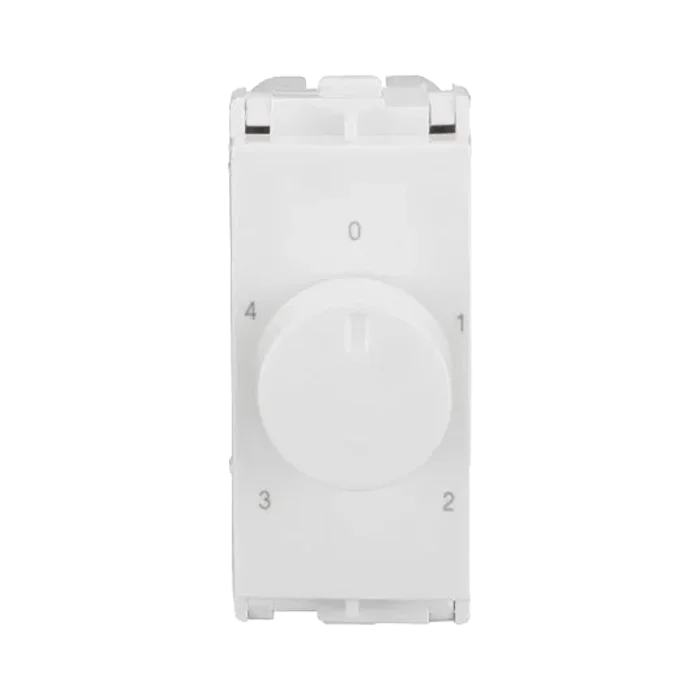
Step-type regulators provide fixed speed levels and may be implemented using resistive or electronic control methods. Low, medium, and high settings make speed selection simple and predictable, which is why these regulators remain popular in many residential installations.
Technology eventually reaches everything. Including fan controls. Smart regulators can integrate with home automation systems, remote controls, and mobile applications. While not essential, they offer convenience that appeals to homeowners looking for greater control over electrical devices throughout the house.
Electrical installation work should always be approached carefully. Even a relatively simple accessory like a regulator requires proper wiring practices to ensure safe operation.
Before anything else, switch off the power. Many installation mistakes happen because people rush this step. Verifying that the circuit is de-energised helps prevent accidents and protects both the installer and the equipment during the process.
Understanding how to connect a fan regulator properly starts with identifying the phase conductor. The regulator must be connected in series with the phase (live) conductor, not the neutral, to ensure proper and safe operation. Incorrect wiring may affect performance and create safety hazards.
Most regulators include clearly marked terminals for incoming and outgoing connections. The incoming phase wire connects to one terminal, while the outgoing wire leading to the fan connects to the other.
Loose terminals increase contact resistance, which can lead to overheating and potential failure over time. Secure terminal connections are therefore essential for reliable operation.
Once wiring is complete, restore power and check operation. Rotate the regulator through its available settings. The speed should change smoothly and predictably. If it doesn't, reviewing the connections before closing everything up is usually a good idea.
For something so small, a regulator has a surprisingly large impact on everyday comfort. People often underestimate that.
Temperature conditions change constantly. A fan speed that feels perfect during a warm afternoon might feel excessive late at night. Regulators allow users to adjust airflow easily, helping create a more comfortable indoor environment throughout changing conditions.
Not every situation requires maximum fan speed. Running a fan at a lower setting when appropriate can help optimise energy consumption. Modern electronic regulators support this by controlling motor operation more efficiently than many older designs.
Mechanical systems generally appreciate moderation. Constant operation at the highest speed isn't always necessary. Operating at appropriate speeds can improve comfort, but improper voltage control may increase current and heating if not designed correctly.
Sometimes convenience matters more than technical specifications. The ability to adjust airflow instantly without changing equipment or operating additional devices is one reason fan regulators have remained an essential part of ceiling fan installations for decades.
Walk into a newly constructed home today, and you'll probably notice something different compared to older properties. The switches, sockets, and accessories all look like part of a coordinated system. This is where the fan regulator modular concept comes in.
A modular fan regulator is designed to fit neatly within a modular switch plate alongside switches and sockets. Rather than appearing as a separate device, it becomes part of a unified electrical accessory layout.
Apart from aesthetics, there are practical advantages too. A fan regulator modular design is typically easier to integrate into modern interiors, simpler to maintain, and more visually appealing. This explains why modular electrical systems have become increasingly popular in residential and commercial projects alike.
Also Read: Types of Electrical Contactors Used in Industrial Applications
As modern interiors continue evolving, modular electrical accessories have become increasingly popular. Lauritz Knudsen Electrical & Automation offers a range of switches, sockets, and modular electrical solutions designed for contemporary homes and commercial spaces. Their products combine functionality, durability, and aesthetics, helping create electrical installations that perform well while complementing modern interior designs.
No. A regulator can only control speed within the operating range designed by the fan manufacturer.
This may occur due to TRIAC-based switching, electrical harmonics, or torque pulsations at reduced voltage levels. The effect can also depend on the compatibility between the regulator and the fan motor.
No. Traditional regulators are intended for conventional AC induction motor ceiling fans, while BLDC fans require their own dedicated electronic controllers. Compatibility should always be verified before installation.
A quality regulator can last for many years, though replacement may become necessary if performance becomes inconsistent or signs of wear appear.
Generally, each fan should have its own dedicated regulator to ensure proper operation and accurate speed control.

Rajesh R Shirodkar,
DGM-Corporate CommunicationRajesh Shirodkar is a seasoned marketing and business leader with over 20 years of experience in the automation and electrical industry, spanning marketing communications, sales, business development, and software solution selling. He has led successful brand transformation initiatives and high-impact marketing programs, including branding and account-based marketing campaigns, as well as industry events that drive visibility, engagement, and growth. With expertise in brand building, lead generation, solution selling, and sales enablement, Rajesh is known for translating technology and business offerings into compelling value propositions and delivering sustainable growth through strong stakeholder collaboration.
Assistance Required?
Select an option to Contact Us

 Contact Us

