Technical Articles
While electricity is a wonderful aspect of modern life, it can be dangerous if we are not careful. Electrical fires are a frequent occurrence in India. We read and hear of instances in the news regularly describing ghastly fire accidents causing massive damage to property and claiming innocent lives. Majority of electrical fires are a result of short circuit due to old wiring, damaged or poor quality of equipment and faulty outlets. It is important to use Fire resistance distribution system.
All the Cables used for Power distribution are not Fire resistance. Non-fire resistance cables can catch fire because of short circuit or other reasons and can be the path for spread of fire. It can also be harmful for Human being as toxic gases can be generated from burning cables.
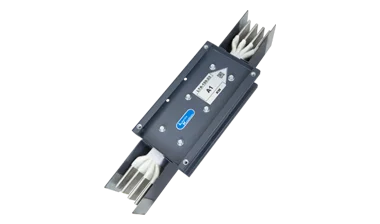
Busbar Trunking System which are widely used as an alternative of Cables for Power distribution are completely Fire resistance. Type testing according to IEC standard is mandatory for Busbar Trunking System.
Following Fire related tests are need to perform on Busbar Trunking System;
This note elaborates more on Procedure of tests, criteria of acceptance and application.
Applicable standard: IEC 61439-6 (Clause 10.101)
Test is suitable for all types of busbar trunking unit to characterize the resistance to flame-propagation of the Busbar trunking system in mounting condition. The test shall be performed according to IEC 60332-3-10, with flame application time of 40 min.
1.1 Test setup & Procedure
The test is performed on a straight length Busbar run with at least a length of 3m and a joint.
Three straight busduct runs of the same type shall be placed vertically at regular intervals on a vertical ladder into a fire test rig, every Busbar shall present different side to the burner flame impact.
In case of large-width busbar runs, the number of straight units under test may be reduced, but in this case the test shall be repeated to carry out the three types of test concerning the orientation of the sides of the enclosure.
For busbar with tap-off facility, one tap-off outlet side shall be fitted as in normal use (for example, with cover), oriented to the burner and located in the immediate vicinity of the burner flame’s impact.
Once burning is ceased, the busduct run enclosures should be wiped clean. All soot to be ignored, once wiped off the original surface should be undamaged. Softening or any deformation of the non-metallic material is ignored. The maximum extent of the damage is measured in meters, to one decimal place, from the bottom edge of the burner to the onset of char.

1.2 Acceptance Criteria
According to standards the system has deemed to have met the requirements if:

1.3 Applications
In Buildings or industries where chances of fire are more. Non fire-rated cable used for power distribution can be a path for fire spread in case of fire accidents, but Sandwich busducts doesn’t catch or spread the fire.
This test verifies the performance of Sandwich Busbar Trunking System under such condition and provide reliable and safe environment.
Applicable standards: IEC 61439-6 (Clause 10.102)
This test is suitable for busbar designed to prevent the spread of fire through building penetration (i.e. Wall crossing or Floor crossing). The test shall be performed according to ISO 834-1 for fire resistance time of 60 min, 90 min,120 min, 180 min or 240 min.
2.1 Test setup & Procedure
The test shall be made on a representative straight busbar unit. The sample shall be mounted on a test floor and the void around the sample shall be filled with fire seal.
Test floor shall be made of concrete, its thickness shall be in accordance with the required fire resistance time (i.e. 60 min to 240 min). The fire seal shall be in accordance with the fire safety building requirements. The whole arrangement shall be mounted according to building practice and shall meet original manufacturer’s instructions.
A set of thermocouples shall be located on the unexposed side of the sample to record the surface temperatures of the fire busduct enclosure.

2.2 Acceptance Criteria
The criteria for failure under integrity and insulation for partitions are given below.
Integrity: is defined in terms of failure by sustained flaming, cotton pad and gap gauges as follows:
a) Sustained flaming: When sustained flaming for not less than 10s on the unexposed face occurs.
b) Cotton pad: When cracks, gaps or fissures allow flames or hot gases to cause flaming or Glowing of cotton fibre pad.
c) Gap gauges: When a 25 mm-diameter gap gauge can penetrate through a gap into the furnace; or when a 6 mm-diameter gap gauge can penetrate through a gap into the furnace and be moved in the gap for a distance of at least 150mm.
Insulation: failure is deemed to occur:
a) When the mean unexposed face temperature increases by more than 1400C above its initial value.
b) When the temperature recorded at any positon on the unexposed face is in excess of 1800C above the initial mean unexposed face temperature.
c) When integrity failure occurs

2.3 Applications
In Buildings having vertical risers which are installed in Electrical shaft and in Industries or Buildings where Feeder run pass thru Wall. Fire resistance busduct installed with Fire sealant material doesn’t allow fire to cross Wall or Floor.
This test verifies the performance of Sandwich Busbar Trunking System under such condition and provide reliable and safe environment.
In addition to Fire resistance tests explained above, additional test of Fire Rating is performed on Busbar Trunking System which proves Circuit integrity even in case of Fire accidents. Test is performed in accordance to IEC 60331 standard which is referred for Cable testing.
3. Fire Rated test
Applicable Standard: IEC 60331-21
The purpose of this test method is to determine whether a Busbar Trunking System can maintain circuit integrity when it is subjected to the condition specified in IEC 60331-21. This test is mainly performed to determine circuit integrity of cable system under fire conditions. Although this test can be performed to evaluate performance of Busduct.
3.1 Test Setup & Procedure
The Busbar Trunking System sample held horizontally by means of a sample supporting system, sample can be clamped to avoid sample movement during test.
The Source of heat is a ribbon type propone gas burner with a nominal burner face length of 500mm with Venturi mixer. The nominal burner face width is 15mm and the face of burner has three staggered rows of drilled holes, normally 1.32mm in diameter and drilled on 3.2mm centers.
To check the integrity of sample during test, one end of Busbar Trunking System is connected with source having 1000V supply voltage and on another end of sample load (Lamp) is connected.
As per manufacturer requirement of 6000C flame is applied to a sample for 2Hrs time (As per standard at least 7500C for Cables testing)
| Requirements | Remark |
|---|---|
| Test Voltage | 1000 V |
| Flame Temperature | 600°C |
| Flame application time | 2 Hours |
| Test voltage application time | 2 Hours |
3.2 Acceptance Criteria
The Busbar Trunking System possesses the characteristics for providing circuit integrity,
a) The voltage is maintained (i.e. no fuse fails or circuit breaker is interrupted)
b) A conductor does not rupture (i.e. the lamp is not extinguished)

3.3 Applications
For locations having highly flammable material and combustive environment for example refinery, chemical plants, warehouse, etc. Plus, for Buildings have emergency services like lifts or medical equipment’s
This test verifies the performance of Busbar Trunking System for Fire Rating of 6000C for 2Hrs and providing reliable and safe environment.

Sourav Dasmodak,
Product Management & Marketing (Powergear - ACB)Product Owner of Air Circuit Breaker (ACB) of Lauritz Knudsen for Domestic & International Market. I can talk to you about Electrical Products' Sales, Business Development, Market Expansion, Cracking Critical Strategic Account, handling Key Account & of course how to develop & motivate Channels along with the organizational growth. Having near about one and a half decade of experience across the country with major electrical manufacturers (Top 4).
Assistance Required?
Select an option to Contact Us
 Contact Us

