Technical Articles
Electrical faults do not give a warning. One loose connection, damaged insulation layer, or overloaded circuit can suddenly interrupt an entire system. In some situations, the issue becomes more serious and creates shock or fire risks inside buildings or industrial facilities. This is why modern electrical installations depend heavily on advanced protection devices rather than simple fuse systems. One such device is the Residual Current Circuit Breaker with Overcurrent Protection (RCBO).
An RCBO is one of those devices that quietly performs an extremely important job every second. It protects electrical circuits from overload, short circuit, and residual current imbalance conditions at the same time. Pretty useful, honestly.
Read below to learn what is an RCBO in detail.
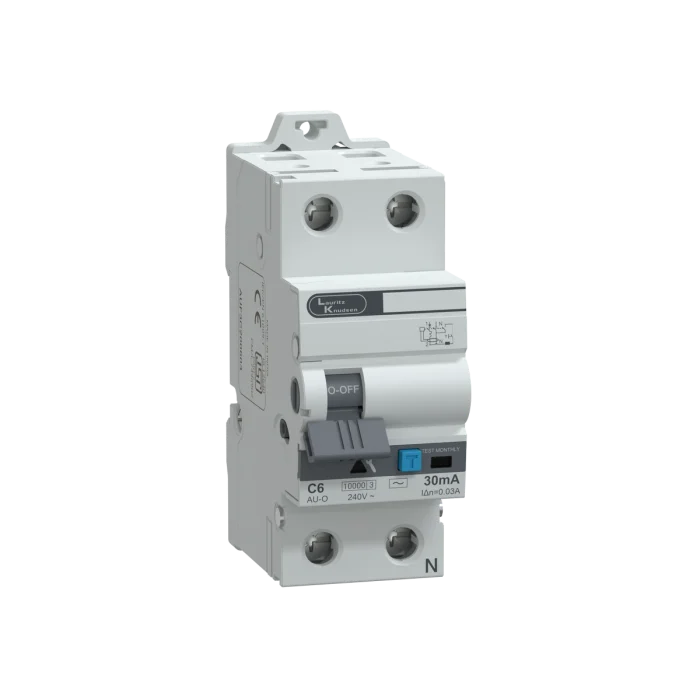
People often search for what is an RCBO when comparing modern protection devices with standard breakers. In simple language, an RCBO combines the functions of an MCB and an RCCB into a single compact unit installed inside the distribution board.
The RCBO full form in electrical systems is Residual Current Circuit Breaker with Overcurrent Protection. It continuously monitors current flow inside a circuit and disconnects only the affected circuit whenever imbalance occurs between phase and neutral currents, indicating leakage (residual current), overload, or short-circuit conditions.
A regular breaker may protect against overloads, but leakage current can still remain undetected in certain situations. That is where an RCBO becomes important. A properly installed Residual Current Circuit Breaker with Overcurrent Protection (RCBO) helps minimise electrical shock risks and protects wiring systems from dangerous fault conditions.
Proper selection of current rating, sensitivity levels (such as 30 mA or 100 mA), and breaking capacity is essential for effective RCBO protection and reliable circuit performance.
Electrical systems behave differently depending on connected loads, operating environments, and equipment sensitivity. Because of that, RCBO devices are available in multiple configurations. Understanding the types of RCBO helps electricians and engineers choose suitable protection systems for safer and more reliable electrical performance.
Type AC RCBOs are designed to detect standard alternating sinusoidal leakage currents. These are commonly used in traditional residential electrical systems where connected loads remain relatively simple.
For example, lighting circuits, heaters, and standard fans usually operate effectively with this configuration. They are affordable and easy to install. However, modern electronic appliances sometimes generate more complex leakage patterns, which may require more advanced protection types for better fault detection and safety performance.
Type A RCBOs detect both alternating current and pulsating DC leakage currents generated by modern electronic equipment. This makes them more suitable for present-day electrical installations.
Washing machines, induction cooktops, inverter appliances, and air conditioners often create pulsating DC leakage during operation. In reality, this type has become increasingly common because modern homes and offices now depend heavily on electronic devices containing advanced control circuits and semiconductor components.
Type F RCBOs are designed for circuits with variable frequency drives and appliances using inverter technology. They provide improved immunity against nuisance tripping and better protection performance in modern electronic applications such as heat pumps, inverter AC systems, and variable-speed motor equipment.
Type B RCBOs are specially designed for systems generating smooth DC leakage currents. These are usually installed in advanced industrial and infrastructure applications involving power electronics.
These are used in EV charging stations, solar systems, or variable frequency drives. Standard protection devices may not always detect those leakage patterns effectively. Type B units provide enhanced protection in such environments where electrical loads and operating characteristics become far more complex than standard residential installations.
The RCBO working principle is based on continuously monitoring electrical current conditions inside a circuit. The device compares phase and neutral current flow and disconnects the supply to the affected circuit immediately whenever unsafe imbalance, overload, or fault conditions occur within the electrical system.
So, how does RCBO work? Let’s understand.
A Core-Balance Current Transformer constantly compares phase and neutral current values during normal circuit operation. Under healthy conditions, both remain balanced throughout the system.
The balance changes instantly when a residual current imbalance occurs due to damaged insulation, accidental human contact, or moisture. The RCBO detects imbalance between phase and neutral currents, indicating leakage (residual current), and disconnects the affected circuit rapidly. This quick interruption significantly reduces the possibility of electric shock and insulation-related fire hazards.
RCBO devices also protect circuits from overload conditions using a thermal tripping mechanism. Excessive current gradually heats the internal bimetallic strip inside the breaker.
As temperature increases, the strip bends until the tripping mechanism activates. This overload protection follows an inverse time characteristic, where higher current levels lead to faster tripping response. Over time, this protection helps improve wiring reliability and reduces long-term damage caused by sustained overload conditions.
Short circuits create extremely high fault currents capable of damaging electrical systems within milliseconds. RCBOs use electromagnetic tripping systems for immediate fault interruption during such situations.
Fault current levels rise quickly during direct short circuits. Fast isolation usually occurs within a few milliseconds depending on fault level and breaker characteristics. This helps minimise damage to cables, switchboards, appliances, and connected distribution systems before the situation escalates further.
Modern electrical systems require multiple layers of protection. An RCBO handles several critical protection tasks simultaneously, making it one of the most practical safety devices used in today’s residential, commercial, and industrial electrical installations.
One major function of an RCBO is detecting leakage current caused by insulation failure, moisture, or accidental contact with live conductors inside a circuit. Even small leakage currents can become dangerous under certain operating conditions.
The device disconnects the affected circuit quickly before serious shock hazards develop. This function becomes especially important in kitchens, industrial plants, outdoor systems, and moisture-prone electrical environments.
An RCBO circuit breaker also protects electrical circuits from excessive current caused by overloaded appliances or excessive connected loads within the system.
For example, running multiple high-power devices from a single circuit may create sustained overload conditions. The RCBO interrupts the supply before overheating damages conductors, insulation, or connected electrical equipment inside the installation.
Short-circuit conditions generate sudden fault currents that can damage electrical systems almost instantly. RCBO devices isolate these faults using high-speed magnetic tripping mechanisms.
Fast interruption helps reduce damage to switchboards, cables, and connected equipment. In industrial and commercial installations especially, rapid fault isolation improves both safety and operational continuity throughout the electrical distribution network.
RCBO devices are now widely used across homes, commercial buildings, and industrial systems because they provide compact multi-function protection. Growing electrical safety requirements have increased the importance of proper RCBO applications across nearly every type of modern installation.
Homes commonly use RCBO protection for lighting circuits, sockets, kitchen appliances, and air-conditioning systems where electrical faults may occur unexpectedly.
Think about older residential wiring systems combined with modern electronic appliances. Leakage current risks often increase over time. RCBO protection improves electrical safety while ensuring only the affected circuit disconnects during a fault instead of shutting down the entire property.
Commercial buildings such as hotels, offices, malls, and hospitals depend heavily on selective circuit protection to maintain stable daily operations across large electrical networks.
What makes RCBOs useful here is controlled fault isolation. If one circuit develops a problem, the remaining circuits continue operating normally. This reduces unnecessary downtime while improving safety and electrical reliability throughout the facility.
Industrial environments contain motors, heavy machinery, automation panels, and high-load electrical systems requiring dependable fault protection under demanding operating conditions.
RCBOs are used in industrial systems mainly for final circuit protection and personnel safety rather than primary protection of large motors or feeder circuits. Their role becomes especially important in applications where rapid leakage and fault isolation are necessary for operational safety and equipment reliability.
Also Read: A Complete Guide to Residual Current Circuit Breaker (RCCB)
Understanding what is an RCBO helps users select better protection systems for homes, commercial facilities, and industrial environments. A properly selected RCBO improves electrical reliability, limits damage during faults, and enhances overall operational safety.
Since RCBOs combine RCCB leakage protection with MCB overcurrent and short-circuit protection inside a single device, they provide compact and efficient multi-layer protection for modern electrical systems. However, correct device selection, installation practices, sensitivity rating, and coordination with the overall electrical system remain essential for dependable long-term performance.
Lauritz Knudsen Electrical & Automation continues to support reliable electrical infrastructure through advanced low-voltage protection solutions, including the AU series RCBO range engineered for dependable performance across diverse applications and operating conditions.
Yes, RCBOs help protect sensitive electronic equipment by disconnecting faulty circuits quickly during overload, short-circuit, or leakage current conditions that may otherwise damage connected systems or appliances.
Many modern electrical standards recommend or require RCBO installation because they provide improved protection against leakage currents, overloads, and short circuits within residential and commercial installations.
Traditional fuses mainly protect against excessive current, while RCBOs provide combined protection against overloads, short circuits, and earth leakage faults within a single compact device.
Yes, RCBOs help reduce electrical fire risks by detecting leakage currents and overload conditions early before excessive heat damages wiring insulation or connected electrical equipment.
Yes, RCBOs are suitable for industrial applications mainly for final circuit protection and personnel safety, although large motor feeders and primary distribution systems usually rely on dedicated industrial protection devices and MCCBs.

Sourav Dasmodak,
Product Management & Marketing (Powergear - ACB)Product Owner of Air Circuit Breaker (ACB) of Lauritz Knudsen for Domestic & International Market. I can talk to you about Electrical Products' Sales, Business Development, Market Expansion, Cracking Critical Strategic Account, handling Key Account & of course how to develop & motivate Channels along with the organizational growth. Having near about one and a half decade of experience across the country with major electrical manufacturers (Top 4).
Assistance Required?
Select an option to Contact Us

 Contact Us

