Technical Articles
Electricity makes modern life effortless. The lights switch on instantly. Appliances hum quietly in the background. Yet, hidden within this convenience is a silent risk. Small leakages of current, barely noticeable, can become dangerous before we even realise what’s happening. That’s where safety devices step in.
Think about this. You plug in a faulty iron or touch a wet switchboard. In reality, protection needs to be immediate, automatic, and reliable. This is exactly why safety components like the residual current circuit breaker have become essential in homes and industries alike.
In this guide, we will explore how it works, why it matters, and where it fits into everyday electrical systems.
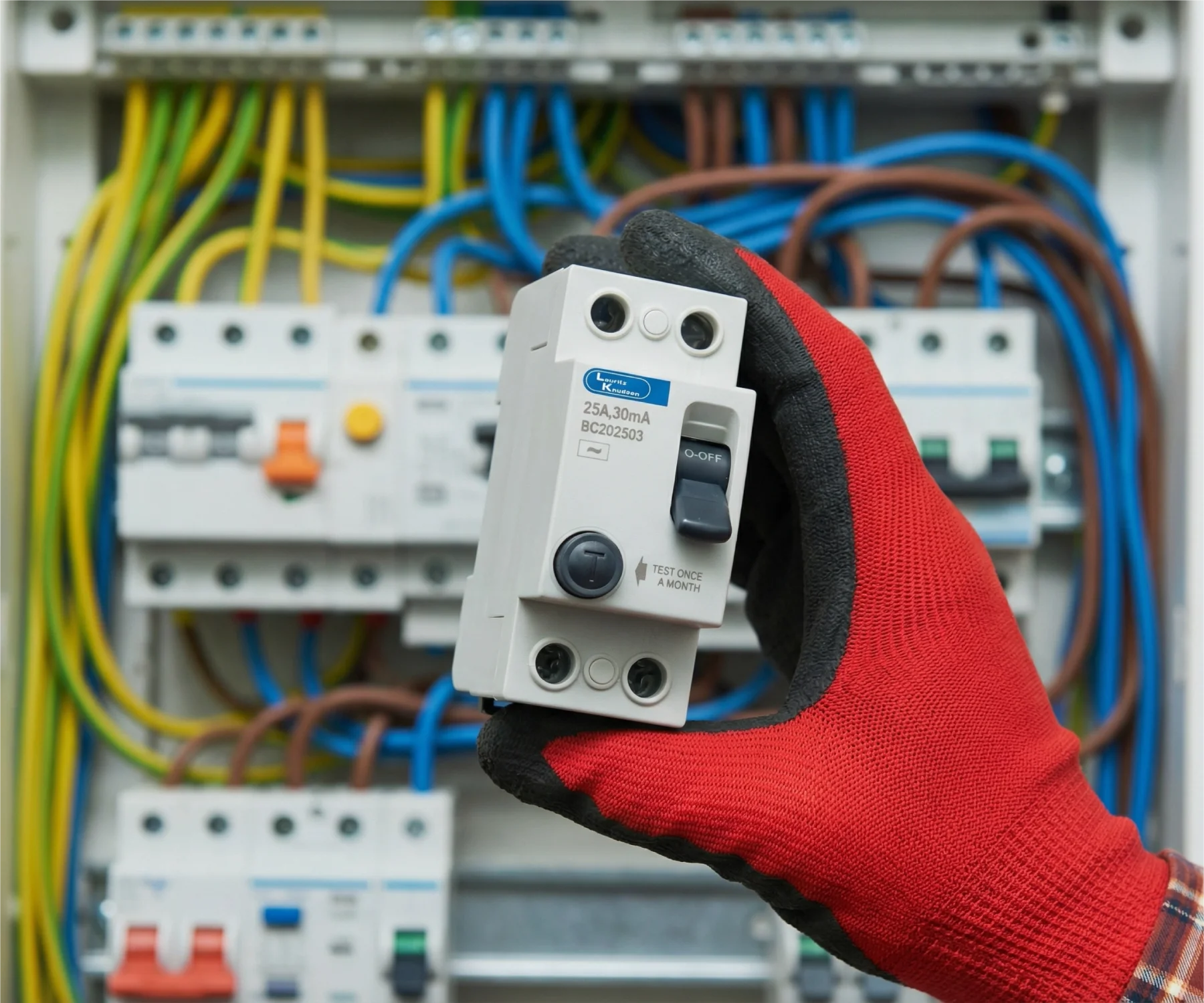
Let’s start simple. Many people ask, what is RCCB in electrical systems, and why do electricians insist on installing it. In everyday terms, an RCCB is a protective device designed to disconnect power whenever it detects current leakage. This leakage could happen due to damaged insulation, faulty appliances, or accidental human contact.
The RCCB full form in electrical, is Residual Current Circuit Breaker, and the name itself hints at what it does. It monitors the balance between live and neutral currents. When the balance is disturbed, even slightly, the device trips instantly.
Unlike a typical MCB, which focuses mainly on overload or short circuit protection, an RCCB circuit breaker looks specifically for leakage currents. What many people don’t realise is that such leakages can be life-threatening long before they cause visible faults. That’s why RCCBs are considered crucial for electrical safety today.
Understanding the RCCB working principle isn’t as complicated as it sounds. In fact, once you imagine current flow like water moving through pipes, things become clearer. The device constantly compares incoming and outgoing current levels. When they don’t match, it assumes something is wrong and reacts immediately. RCCBs do not protect against overload or short circuit. This is why they must be paired with MCB/MCB+RCBO.
At its core, the principle revolves around balance. Under normal conditions, the current flowing through the live wire returns via the neutral wire. The residual current circuit breaker measures this equality using a sensing coil. If leakage occurs, say through a person or a damp surface, the returning current reduces. The device senses this mismatch and prepares to trip within milliseconds, preventing serious accidents.
Leakage doesn’t always mean sparks or smoke. Sometimes it’s subtle. Think about an old washing machine with worn insulation. Current might escape through its metal body. This is where how RCCB works becomes important. The RCCB detects even tiny leakages, often as low as 30mA. The sensitivity is what makes it effective for human safety rather than just equipment protection.
Once leakage is detected, speed matters. The tripping mechanism inside the RCCB circuit breaker activates a mechanical switch that cuts off power. This happens in fractions of a second. What many people don’t realise is that this rapid action can literally save lives. Delayed disconnection increases shock severity, so RCCBs are designed to respond faster than most traditional protection devices.
You may have noticed a small “Test” button on the device. It isn’t decorative. Pressing it intentionally creates an imbalance to check if the device trips. This simple step confirms how RCCB works in real situations. Regular testing ensures the sensing mechanism remains active. In homes where electrical loads change frequently, this quick check can prevent unpleasant surprises later.
Not all RCCBs behave the same way. Different environments demand different sensing characteristics. This is why understanding the types of RCCB becomes useful when planning installations. Some respond to simple AC leakage. Others handle complex waveforms from modern electronics. Choosing correctly improves both safety and system reliability.
Among the common types of RCCB, Type AC is widely used in residential setups. It responds only to sinusoidal alternating current leakage. For example, lighting circuits or traditional appliances work well with this device. However, in reality, modern appliances generate mixed currents. So while Type AC is economical and effective, its application is gradually narrowing in technologically advanced environments.
Type A RCCBs can detect both AC leakage and pulsating DC components. This makes them suitable for washing machines, induction cooktops, and inverter-driven loads. When discussing the types of RCCB, electricians often recommend Type A for urban homes. What many people don’t realise is that electronic circuits quietly introduce leakage patterns that older devices simply cannot detect.
Type B devices are designed for highly sensitive and complex electrical environments. They can detect AC, pulsating DC, and smooth DC leakage currents. Think about solar inverters, EV charging stations, or medical equipment- these systems generate unconventional leakage patterns. A standard device may miss them. Type B RCCBs ensure reliable protection where modern power electronics dominate installations.
Selective or time-delayed RCCBs are designed for coordinated protection. They trip after a slight delay, allowing downstream devices to disconnect first. This approach prevents unnecessary power outages in larger systems. In commercial buildings, for example, maintaining supply continuity matters. These RCCBs ensure safety without shutting down entire floors when a minor leakage occurs in just one circuit.
The Type F RCCBs detect sinusoidal AC, pulsating DC, and composite residual currents. They provide enhanced protection for circuits with variable frequency drives, household appliances, and modern electronics that generate high‑frequency leakage currents. Unlike Type A, they are more resistant to nuisance tripping caused by harmonics. Type F RCCBs are ideal for homes and industries using advanced equipment with inverter technology.
The application of RCCB extends far beyond residential switchboards. From construction sites to hospitals, these devices quietly safeguard people and equipment. Think about environments where moisture, heavy machinery, or temporary wiring exists. Leakage risks rise dramatically there. RCCBs step in as a dependable layer of protection.
Homes remain the most common application of RCCB. Kitchens, bathrooms, and outdoor sockets are especially vulnerable. Imagine touching a faulty geyser with wet hands. The device cuts the supply instantly, reducing shock risk. Many modern electrical panels now include at least one RCCB as standard practice, particularly in urban apartments with increasing appliance density.
Factories deal with high-powered motors and long cable networks. Leakage currents can develop unnoticed due to insulation wear or harsh environments. Here, the application of RCCB becomes critical for worker safety. Installing multiple RCCBs across distribution boards helps isolate faults quickly. This targeted disconnection reduces downtime while still maintaining overall plant operations.
Temporary wiring setups are unpredictable. Cables lie exposed. The weather changes suddenly. Workers handle power tools throughout the day. In such situations, an RCCB circuit breaker acts as a frontline protector. Portable RCCB units are often attached to extension boards to prevent fatal shocks. It’s a small investment compared to the massive safety benefits it delivers.
Shopping malls, offices, and hotels rely on uninterrupted power. Yet safety cannot be compromised. Installing a residual current circuit breaker at different panel levels ensures both protection and operational stability. For example, leakage in a pantry circuit shouldn’t affect elevator systems. Strategic RCCB placement allows fault isolation without triggering widespread inconvenience.
So what exactly is the function of RCCB in everyday electrical systems? Beyond simply tripping power, it plays multiple roles in maintaining safe operation. From shock prevention to fire risk reduction, its contribution is broader than many assume. Let’s look closer at these practical benefits.
The primary function of RCCB is to protect human life. When leakage passes through a person, the device disconnects the supply almost instantly. Think about children playing near switchboards or someone using appliances barefoot. These real-life situations highlight why RCCBs are no longer optional. Their sensitivity makes them indispensable in modern electrical design.
Leakage currents can generate heat over time. Damaged wires hidden behind walls may smoulder silently before igniting. Here, the function of RCCB becomes preventive rather than reactive. Cutting the supply early reduces fire hazards significantly. This feature is particularly valuable in wooden structures or buildings with ageing electrical infrastructure.
RCCBs also help protect appliances. Continuous leakage can degrade motor windings and electronic components. The device extends equipment life by disconnecting faulty circuits. Many facility managers now combine RCCBs with surge protection systems. This helps create layered safety strategies in sensitive installations like data centres.
Modern electrical maintenance relies on early fault detection. RCCB tripping patterns often indicate insulation deterioration or moisture ingress. Observing these signals helps technicians plan preventive repairs. In this way, the device indirectly supports predictive maintenance practices. Over time, this reduces unexpected failures and improves overall system reliability.
Also Read: How Miniature Circuit Breakers (MCBs) Protect Electrical Circuits in Modern Buildings
Electrical safety isn’t about reacting to disasters. It’s about quietly preventing them. Homeowners and engineers must understand what is RCCB in electrical setups, along with its behaviour and applications, to make smarter decisions. The RCCB full form in electrical might sound technical. But its purpose is deeply practical- protecting lives and property.
From grasping the RCCB working principle to choosing the right types of RCCB, every step improves safety standards. Whether installed in a small home or a large industrial plant, the residual current circuit breaker continues to prove its worth as one of the most reliable protective devices in modern electrical systems. So, explore the different types of RCCBs by Lauritz Knudsen Electrical and Automation for your application and buy the best quality.
An RCCB detects leakage current. It protects against electric shock. On the other hand, an MCB mainly protects against overload and short circuits.
It is generally recommended to test the device once a month. Use the test button for this. It helps ensure proper tripping action.
RCCBs can detect an imbalance without earthing. But proper earthing significantly improves overall electrical safety.
A 30mA sensitivity RCCB is commonly recommended for residential protection against electric shock risks.
Frequent tripping may indicate moisture, faulty appliances, insulation damage, or cumulative leakage in the circuit.

Rajesh R Shirodkar,
DGM-Corporate CommunicationRajesh Shirodkar is a seasoned marketing and business leader with over 20 years of experience in the automation and electrical industry, spanning marketing communications, sales, business development, and software solution selling. He has led successful brand transformation initiatives and high-impact marketing programs, including branding and account-based marketing campaigns, as well as industry events that drive visibility, engagement, and growth. With expertise in brand building, lead generation, solution selling, and sales enablement, Rajesh is known for translating technology and business offerings into compelling value propositions and delivering sustainable growth through strong stakeholder collaboration.
Assistance Required?
Select an option to Contact Us

 Contact Us

