Technical Articles
Your machines might be drawing more power than they actually need to do the job. Not because they are faulty, but because of how electrical systems behave. Industries often pay higher demand charges or penalties because of reactive power, even though it does not produce useful work.
This is why improving efficiency at the electrical level matters. Tools like power factor correction devices help bring things back into balance without changing your operations drastically.
Let’s break it down without overcomplicating things. Every electrical system uses two types of power- real power (which does actual work) and reactive power (which supports the system but doesn’t directly produce output). Together, they form apparent power.
Now here’s the catch. When reactive power becomes too high, your system becomes inefficient. That’s what we call a poor power factor. And yes, it can quietly increase your electricity bill.
This is exactly where Power Factor Correction comes in. It’s a method of reducing that unnecessary reactive power so your system uses energy more effectively. Instead of drawing excess current, the system becomes more balanced.
In many setups, a Power Factor Controller monitors the system continuously and adjusts correction levels automatically. You don’t have to manually tweak anything. It just works in the background.
For example, in a factory running multiple motors, the imbalance can be significant. A well-designed Power Factor Correction Circuit helps stabilise the system, reducing losses and improving performance.
In reality, it’s not about using less electricity. It’s about using it properly.
So where do capacitors come into the picture?
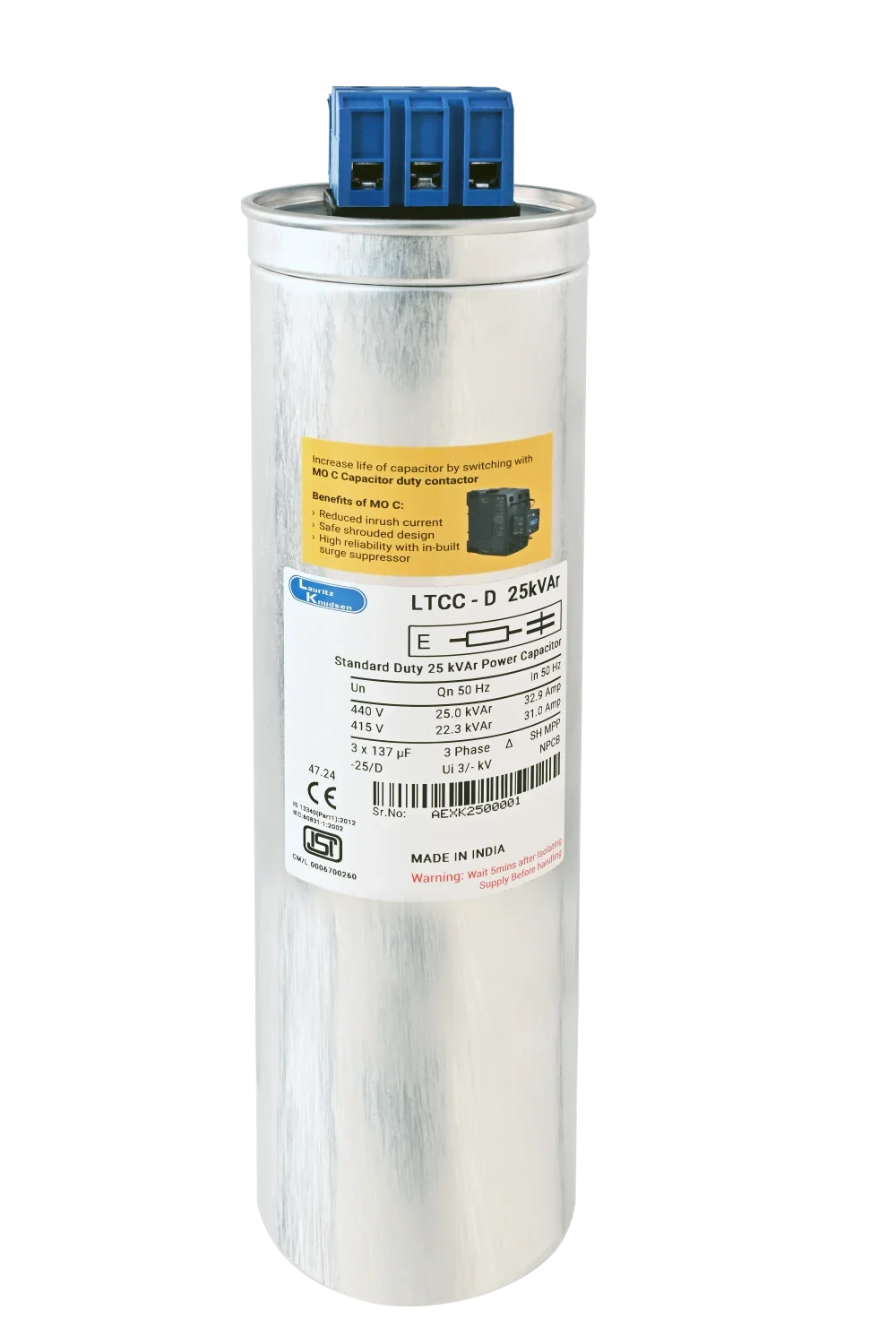
Simply put, Power Factor Correction Capacitors are the most common tools used to fix poor power factor. Capacitors supply required reactive power locally, which means your system doesn’t have to pull it from the main supply.
Think of it like this: instead of borrowing extra energy from the grid, you are generating what you need right where it’s required. This reduces strain on the system.
These capacitors are part of broader Power Factor Correction devices installed in industrial setups. You will often find them inside control panels, working quietly without drawing attention.
From small commercial units to large manufacturing plants, they can be scaled easily. When paired with a Power Factor Controller, they operate automatically, switching in and out depending on demand.
At first, it might seem like capacitors are just passive components. But in reality, they play a very active role in balancing electrical systems. They don’t reduce your load. They optimise it. Once you understand how they work, the concept of Power Factor Correction becomes much clearer.
Inductive loads like motors create reactive power demand. Power factor correction capacitors counter this by supplying leading reactive power. In simple terms, they cancel out the lag caused by inductive loads. The result? A more balanced system that doesn’t need to draw excess current from the grid. This balancing act is the foundation of every efficient Power Factor Correction circuit used in industrial applications.
Now, not all loads are constant. Machines turn on and off, and demand fluctuates. That’s why systems use a Power Factor Controller to manage capacitor banks. It continuously monitors the power factor and switches capacitors in or out as needed. Adjustments are made in real time, ensuring the system stays efficient without manual intervention or guesswork.
When your system draws excess current, losses increase. Cables heat up, energy gets wasted. By using Power Factor Correction devices, you reduce the current flow for the same load. This directly lowers line losses. It results in less heat, less stress on equipment, and better overall efficiency. This is a small adjustment with a surprisingly big impact on long-term performance.
Voltage fluctuations are common. Voltage levels become more stable because the system isn’t overloaded with reactive demand with proper Power Factor Correction. Power factor correction supports improved voltage stability by reducing reactive loading on the system.
Improving the power factor isn’t just a technical upgrade. It directly affects costs, efficiency, and equipment life. Many industries ignore it until problems show up. But addressing it early with the right Power Factor Correction capacitors can save a lot more than expected.
A poor power factor means you are paying for extra apparent power. By improving it through power factor correction, you reduce unnecessary demand charges. Over time, the savings can be significant. Especially in industries where energy consumption is high, even a small improvement translates into noticeable cost reductions.
Electrical stress is a silent killer. When systems operate inefficiently, components heat up faster and wear out sooner. Using Power Factor Correction devices helps reduce that stress. Motors run smoother. Transformers operate within safer limits. Overall, your equipment lasts longer. It’s one of those benefits people only notice when things don’t fail unexpectedly.
Your system can handle more load without upgrading infrastructure with improved efficiency. This is because power factor correction capacitors reduce unnecessary current flow. In simple terms, you are freeing up capacity within your existing setup. This can delay costly expansions and make your current system more productive.
Choosing the right system is not always as straightforward as picking a capacitor and installing it. In reality, it depends a lot on how your electrical load behaves throughout the day.
In many cases, the decision comes down to whether your load is stable or constantly changing, along with factors like harmonics and the risk of overcorrection.
Also Read: What Is Ring Main Unit (RMU)? Types, Working Principle & Function
In reality, power factor correction isn’t just an electrical concept. It’s a practical way to improve how your entire system performs. Lower bills, better efficiency, longer equipment life- it all adds up.
Solutions like Lauritz Knudsen’s capacitor range, whether it’s heavy-duty box capacitors, cylindrical designs, or ultra-heavy-duty variants, are built for real industrial challenges. Their advanced Power Factor Correction devices are designed to handle harmonics, load fluctuations, and demanding environments without compromise.
So, if you’re looking at your energy costs and wondering where the inefficiency lies, this might be the place to start. Quietly, effectively and with results you will actually notice.

Rajesh R Shirodkar,
DGM-Corporate CommunicationRajesh Shirodkar is a seasoned marketing and business leader with over 20 years of experience in the automation and electrical industry, spanning marketing communications, sales, business development, and software solution selling. He has led successful brand transformation initiatives and high-impact marketing programs, including branding and account-based marketing campaigns, as well as industry events that drive visibility, engagement, and growth. With expertise in brand building, lead generation, solution selling, and sales enablement, Rajesh is known for translating technology and business offerings into compelling value propositions and delivering sustainable growth through strong stakeholder collaboration.
Assistance Required?
Select an option to Contact Us

 Contact Us

