Technical Articles
Every electrical system is designed with a non-negotiable value in mind: life safety. Whether it is a carrier or industrial network, basic residential installation, or very large air conditioning installations as soon as there’s an electrical fault and the network need to be isolated quickly and safely. And this is where the switchgear comes in.
While it is a fundamental component of our power infrastructure, few people actually know what switchgear is, let alone why it’s so important in electrical networks and how it's used? Now let’s just take the walk one step at a time.
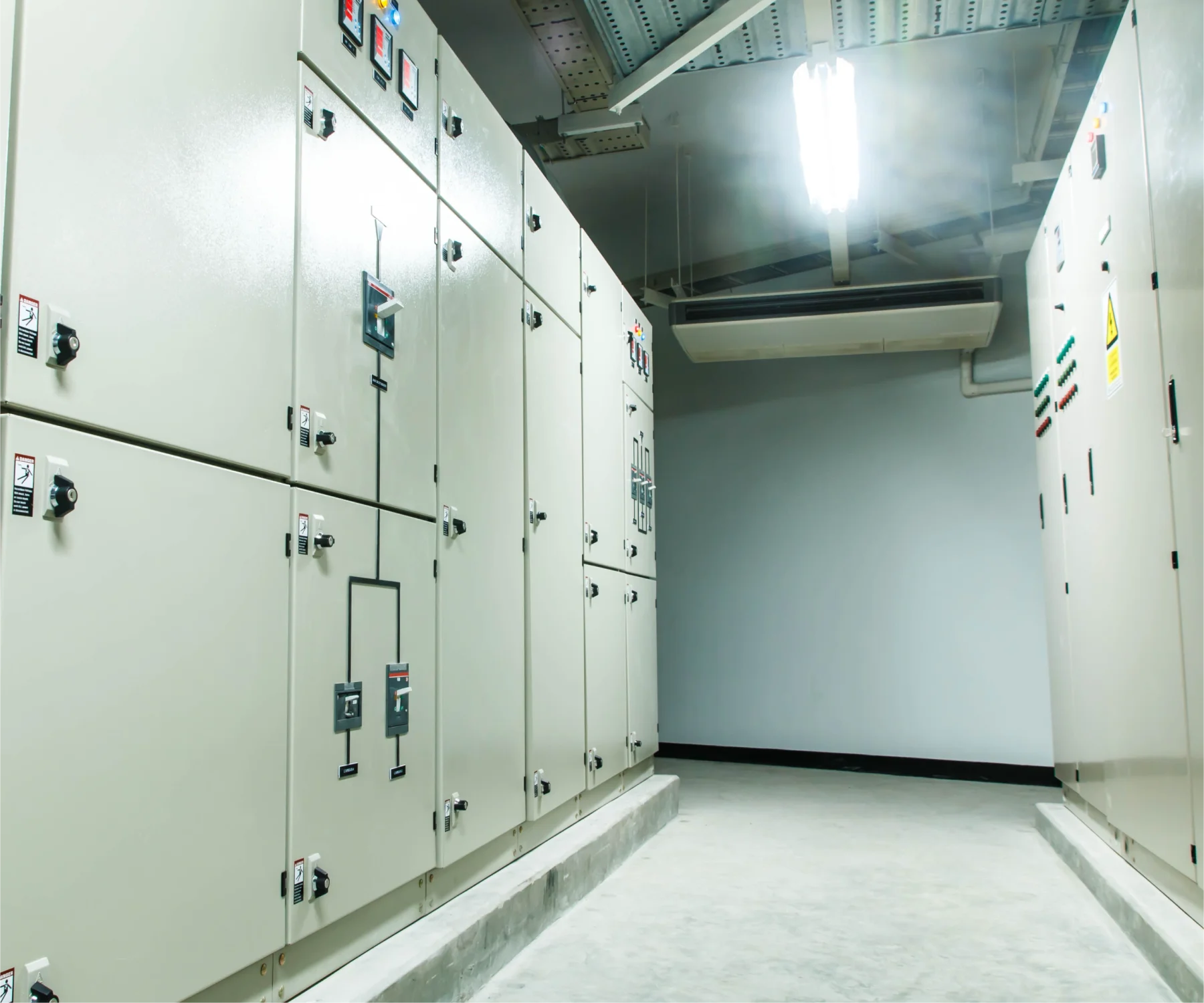
Fundamentally, switchgear is a term used to describe a combination of electrical control, protection and measuring devices used in high and medium-voltage electrical systems. If an electrical system was viewed in terms of a transportation system, switchgear would operate like traffic control, guard rails and emergency lodge pole barriers bundled up together into one suite.
When people ask what is switchgear, the simplest answer is this: it is the protective and control layer of an electrical system.
Switchgear ensures:
Without switchgear, even minor electrical disturbances could escalate into severe equipment damage or safety hazards.
A practical way to understand what are switchgears used for is by looking at real-world scenarios. Electrical networks constantly face risks such as short circuits, overloads, insulation failures, and voltage fluctuations. Switchgear is designed to handle exactly these situations.
In everyday operations, switchgear is used for:
In other words, switchgear acts before faults can cause larger disruptions.
The functions of switchgear extend beyond simple on-off control. Modern electrical networks require intelligent monitoring and fast response mechanisms.
Some of the most important functions include:
Each of these roles directly impacts system reliability and equipment lifespan.
Electrical installations vary widely in voltage levels and operational demands. This is why multiple types of switchgear exist, each suited for specific applications.
Designed for systems typically operating below 1 kV. These are commonly seen in residential buildings, offices, and small commercial facilities.
Typical applications:
Noted: Distribution boards and lighting circuits are NOT classified as "switchgear
Medium voltage typically ranges from **1 kV up to 36 kV (utility-dependent, can go up to 52 kV under IEC classification
Common uses:
Built for transmission systems operating at much higher voltage levels. Reliability and insulation design become especially critical here.
Key usage areas:
Understanding the types of switchgear helps in selecting equipment aligned with voltage and safety requirements.
Not all switchgear assemblies are identical. Performance, safety, and durability depend on design characteristics. This is why engineers often evaluate the essential features of switchgear before specifying equipment.
Reliable switchgear typically offers:
These features ensure switchgear performs correctly during both normal and fault conditions.
To fully grasp switchgear functionality, it is important to understand switchgear components and how they interact. Switchgear is not a single device but a coordinated system of multiple elements.
Circuit breakers are central to switchgear assemblies. Their job is to interrupt fault currents and protect circuits from damage.
Primary responsibilities:
Unlike circuit breakers, disconnectors are used when circuits are already de-energized. Their purpose is safe isolation.
Typical functions:
Relays act as the decision-making layer. They monitor electrical parameters and trigger protective actions.
Monitoring capabilities:
Busbars serve as conductive pathways within switchgear assemblies. They distribute electrical power efficiently.
Core purpose:
These components measure current and voltage safely for monitoring and protection systems.
Key benefits:
Understanding switchgear components clarifies how protection and control functions are executed.
Electrical faults are not rare events. Systems must be prepared for abnormal conditions at all times. Switchgear improves safety by ensuring faults are managed without cascading failures.
Safety advantages include:
This layered protection approach is essential in modern installations.
Selecting switchgear involves more than matching voltage ratings. System design, load characteristics, environmental conditions, and safety compliance all play roles.
Important considerations:
Proper selection directly influences performance and lifecycle costs.
Switchgear is often unnoticed during normal operation. Its true importance becomes visible only during faults. A reliable unit prevents disruptions, protects assets, and safeguards personnel.
Consequences of poor switchgear performance:
Reliability is therefore not a luxury but a necessity.
Also Read: Why 800VAC is the Future of Solar Switchgear: A Technical Deep Dive
With electrical systems, interference comes from unpredictable sources. Switchgear meets this challenge by providing monitoring, control and protection in a planned manner.
Knowing what is switchgear, the types of switchgears and its functions will help the designers or engineers to make better decisions in selection system facilities for a specific application.
Switchgear, simplifying the overall system Switchgear is a combination of devices which use fuses or circuit breakers to prevent circuits and electrical equipment from overloads. It protects systems from failure such as short circuits or overloads, and allows for safe operation and service. As it were, it is the backbone that protects an electrical network.
Switchgear is used to control the flow of electricity in a system and to de-energize circuits. One purpose is to prevent faults from causing damage to transformers, motors or cables and also provide Go/No-Go indications of the system’s operating condition.
The key classes a Voltage, medium-voltage, and high-voltage switchgear. Each construction is for certain voltage ranges and applications, thereby providing appropriate insulation, protection and over all functionality.
Switchgear assemblies generally consist of circuit breakers, protective relays, isolating switches, busbars and metering. Each module has different functions of protection, monitoring and power control.
Good switchgears need to provide reliability, rapid response time, insulation that can withstand high voltage and some flexibility in terms of thermal as well as electrical stability. Such features guarantee that the system is safe and reliable to use.
Assistance Required?
Select an option to Contact Us

 Contact Us

