Technical Articles
Walk into a modern factory today and you will notice something immediately. Fewer manual operations. More connected systems. Machines communicating with each other almost constantly. Production environments have changed quietly over the years, but the impact has been massive.
Industries no longer focus only on increasing output. They also care about precision, uptime, energy efficiency, process visibility, and workplace safety. That shift pushed automation from being an optional upgrade to something much more essential.
Think about a packaging plant where hundreds of operations happen every minute. A small delay or human error can affect the entire production cycle. That is where automation makes a real difference. Understanding what is industrial automation helps industries see how intelligent control systems improve operational reliability while keeping production processes faster, safer, and far more consistent.
Industrial automation is the use of control technologies, monitoring devices, communication systems, and software-driven equipment to operate industrial processes. This reduces the need for manual intervention and improves operational consistency.
Instead of depending entirely on operators for repetitive tasks, industries use automated systems to manage machines, production flow, motor control, fault monitoring, and process coordination. For example, conveyor systems can automatically regulate speed based on production demand without requiring constant manual adjustment. Automation is not limited to robotics or large assembly lines; it also includes process control, SCADA systems, distributed control systems (DCS), and energy monitoring solutions used across industries of all sizes.
Even smaller manufacturing facilities now depend on automation for monitoring, energy optimisation, and process stability.
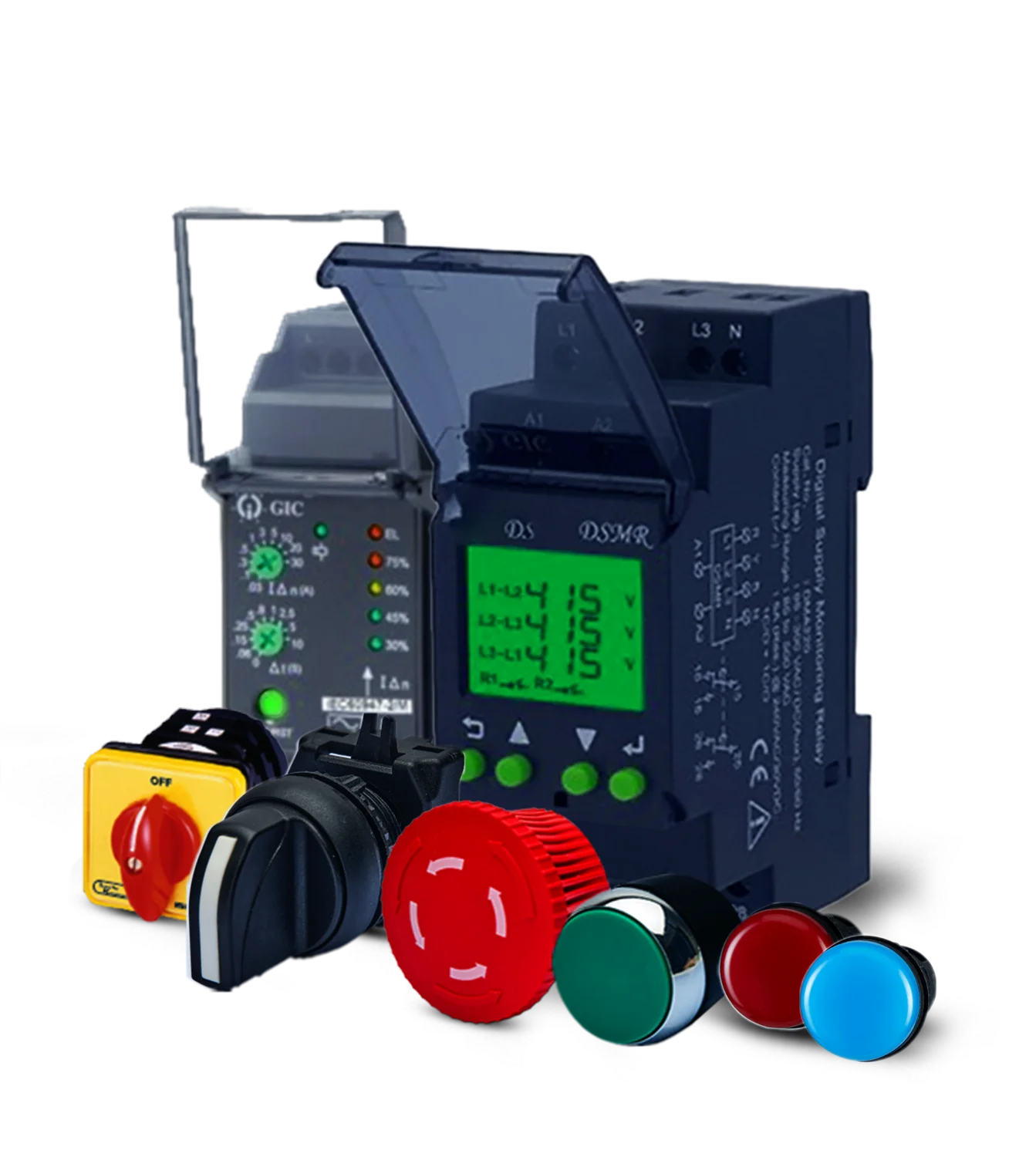
Modern industrial automation systems commonly include PLCs, HMIs, SCADA systems, AC drives (VFDs), sensors, industrial gateways, Ethernet switches, and condition monitoring devices and intelligent monitoring devices working together to improve industrial operations across manufacturing, utilities, infrastructure, and processing industries.
Industrial operations today involve continuous production targets, tighter quality requirements, and increasing pressure to reduce downtime. Manual systems alone often struggle to maintain that level of operational consistency over long production cycles.
Production systems operate more efficiently when processes remain consistent throughout operation. Automation maintains stable process parameters such as speed, pressure, temperature, and timing through closed-loop control systems.
Whether managing motor speed, pressure levels, or conveyor timing, automated systems reduce unnecessary variation while improving process stability across industrial applications.
Industrial facilities contain rotating equipment, high-current electrical systems, thermal machinery, and automated production lines that can become risky during manual intervention. Automation reduces direct operator exposure through interlocks, safety PLCs, emergency shutdown systems (ESD), and remote monitoring capabilities.
Safer processes also reduce shutdowns, equipment stress, and unexpected operational interruptions.
The growing use of automation is connected directly to operational efficiency. Industries today require better process control, faster monitoring, and improved reliability while managing energy usage and production quality more carefully than before.
Automated systems can operate continuously for long durations with minimal interruption during production cycles. Machines controlled through PLCs, AC drives, VFDs and industrial control systems handle repetitive operations quickly and consistently, helping industries maintain better output performance throughout daily operation.
Manual operations naturally create occasional inconsistencies because human response varies during repetitive tasks or demanding production schedules. Automation improves accuracy by maintaining programmed operating sequences continuously. That consistency helps reduce avoidable production errors and process instability across manufacturing environments.
Industrial equipment does not always require maximum operating capacity continuously during production cycles. AC Drives and Energy Management Solutions help industries optimise motor operation according to actual load demand, reducing unnecessary power consumption and improving operational efficiency.
Automation systems monitor equipment conditions continuously instead of depending only on manual inspection. Condition monitoring systems (such as temperature, vibration, and current monitoring) along with PLC diagnostics and gateways help operators identify abnormal operating conditions earlier before faults grow into larger operational problems or equipment failures.
Production becomes easier to manage when operators can monitor performance data in real time. HMIs, Ethernet switches, and industrial communication systems provide better visibility across machinery, alarms, operational conditions, and production flow, helping industries make faster operational decisions.
Different industries require different automation structures depending on production volume, process flexibility, and operational complexity. Understanding the types of industrial automation helps industries choose systems better suited for specific production requirements.
Fixed automation is commonly used for repetitive, high-volume manufacturing processes where production sequences remain mostly unchanged for long periods. Automotive assembly lines are one example. These systems provide high production speed and process consistency, although modifying the setup later usually requires significant changes.
Programmable automation allows manufacturers to change operating sequences based on varying production requirements. Industries handling batch production often use programmable automation because control programs can be adjusted according to different manufacturing operations. PLC systems are widely used within such applications.
Flexible automation supports quicker operational adjustments without extensive production shutdowns or complicated reconfiguration procedures. Facilities manufacturing multiple product variations often prefer flexible systems because machines can adapt faster to changing production demands while maintaining operational efficiency.
Integrated automation connects multiple industrial control systems into one coordinated operational network. PLCs, HMIs, AC drives, gateways, and monitoring systems communicate together to improve operational control, process visibility, and production coordination across industrial environments. Lauritz Knudsen automation solutions support such integrated industrial operations.
Also Read: How Much Does a Smart Home Automation Cost in India?
Industrial processes have become far more demanding than before. Faster production alone is no longer enough. Industries now expect operational stability, energy efficiency, safer working conditions, and continuous process visibility across every stage of production.
That is why the importance of industrial automation continues growing across manufacturing, infrastructure, and utility sectors worldwide. Automated systems help industries maintain consistency while improving operational control and reducing avoidable downtime.
The benefits of industrial automation extend beyond productivity improvements. Better monitoring, lower operational errors, faster fault detection, and improved energy management all contribute to stronger long-term industrial performance.
Lauritz Knudsen Electrical & Automation supports modern industries through advanced automation technologies including PLCs, HMIs, AC Drives, Soft Starters, Ethernet Switches, Gateways, and Temperature Monitoring Solutions designed for dependable industrial control and automation performance.
No. Automation reduces repetitive manual tasks, but skilled operators remain important for supervision, maintenance, troubleshooting, and process management activities.
Yes. Controlled operation, reduced overload conditions, and continuous monitoring help minimise equipment stress and improve long-term machinery reliability.
Absolutely. Many medium-sized industries now use automation for energy savings, process monitoring, and improving production consistency across operations.
PLCs, HMIs, AC drives, sensors, gateways, Ethernet switches, monitoring systems, and industrial communication networks are widely used in automation environments.
Automation reduces manual exposure to hazardous processes while improving monitoring, fault detection, and safer operational control across industrial facilities.
Rajesh R Shirodkar,
DGM-Corporate CommunicationTest
Quick Links
Miniature Circuit Breaker | Air Circuit Breaker | Home Automation Systems | Modular Switches | Variable Frequency Drives | Energy Management System | IEC 61439 Panels | Moulded Case Circuit Breakers | AC DRIVE | Submersible Pump Motor Starter | Mobile Starter | Industrial Automation | Residual Current Circuit breaker | APFC controller | Power Factor Correction | Motor Protection Device | Medium Voltage | Vacuum Circuit Breaker | Programmable Logic Controllers | Human Machine Interface | Solar MCCB
Assistance Required?
Select an option to Contact Us
 Contact Us

