Technical Articles
Electrical faults do not announce themselves. One moment everything runs normally, and the next moment a short circuit or overload can place enormous stress on transformers, motors, cables, and switchgear systems. This is why circuit breakers are such an important part of electrical infrastructure. They quietly sit in the background. But, play an important role.
Over the years, industries have moved away from bulky oil-based interruption systems and started preferring cleaner, more dependable technologies. Vacuum-based interruption is one of them. Honestly, the shift makes sense. These breakers respond quickly, require far less maintenance, and fit well into modern industrial power systems are well suited to modern industrial power systems where reliability matters every single day.
Whether it is a factory, utility network, or infrastructure project, understanding this technology helps in choosing safer and smarter protection systems.
What is Vacuum Circuit Breaker? A vacuum circuit breaker is a medium-voltage switching device that interrupts electrical current by extinguishing the arc inside a sealed vacuum chamber. When electrical contacts separate under load conditions, an arc naturally forms between them. In ordinary environments, that arc can continue for longer periods. Inside a vacuum, however, there are very few molecules available to sustain ionisation there are very few particles available to sustain ionisation once the current passes through its natural zero allowing the arc to extinguish rapidly.
This operating principle makes vacuum interruption technology highly effective for medium-voltage power systems. These circuit breakers are widely used in industrial plants, substations, commercial buildings, and infrastructure projects because of their reliability and reduced maintenance requirements. Vacuum systems also improve operational safety since they eliminate the need for oil or gas-based arc extinguishing mediums.
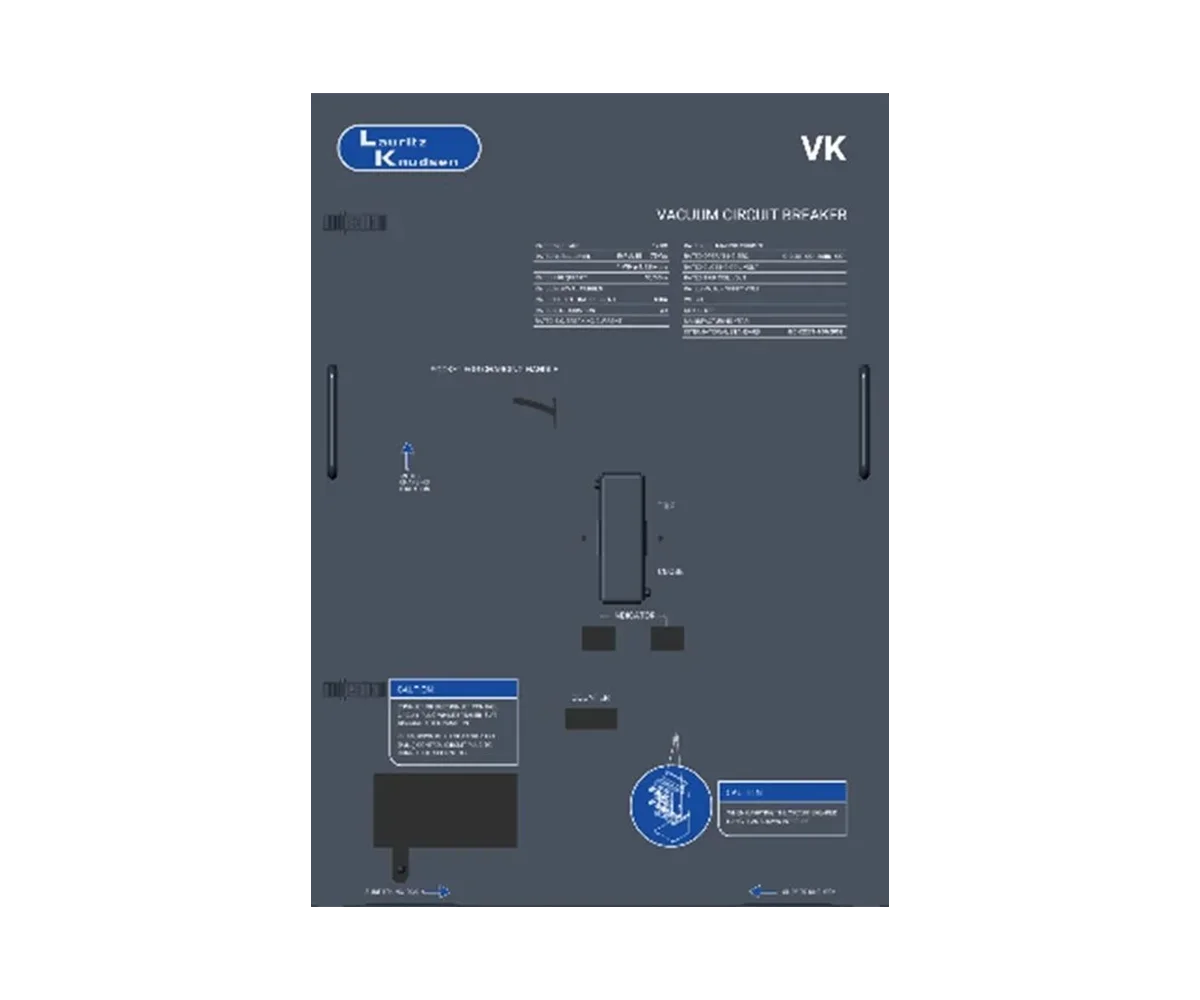
Modern solutions such as the VK Series from Lauritz Knudsen Electrical & Automation are designed for dependable medium-voltage switching applications up to 12kV and 50kA.
At first, the internal operation can sound complicated because everything happens extremely fast inside a sealed chamber. But if you break it down step by step, the process becomes easier to picture. The breaker simply separates electrical contacts inside a vacuum environment and interrupts the fault current before damage spreads through the system.
The operation begins when a fault condition or switching command activates the breaker mechanism. The movable contact separates from the fixed contact inside the sealed vacuum interrupter. As the contacts pull apart, an electrical arc forms briefly between them. The arc duration remains extremely short the arc persists only until the natural current zero, after which it extinguishes rapidly because the vacuum environment does not support sustained ionisation like air or oil systems.
As soon as the contacts move apart, a short-lived arc appears because current still tries to flow between them. Inside normal air, that arc could continue longer. Inside a vacuum, though, there are barely enough particles available to maintain conduction. The arc therefore collapses very quickly. The simple principle is really the heart of the vacuum circuit breaker working in medium-voltage protection systems.
After arc extinction, the dielectric strength inside the interrupter recovers very rapidly. This quick recovery prevents restriking and improves system reliability during repeated operations. In medium-voltage industrial systems, fast interruption response helps protect transformers, motors, switchgear panels, and distribution systems from severe electrical stress caused by short circuits or overload conditions.
Different applications require different breaker configurations depending on installation layout, maintenance accessibility, and operational requirements. Although the interruption principle remains similar, breaker construction and mounting design may vary considerably across industrial and commercial electrical systems.
Medium-voltage breakers are the most commonly used VCB category in industrial and commercial power systems. They are typically used across distribution networks ranging from 1kV to around 52kV. These systems handle regular industrial switching duties, transformer protection, and motor feeder applications. Medium-voltage VCBs have become extremely popular because they combine dependable fault interruption with relatively compact switchgear construction.
Low current vacuum circuit breakers are designed for applications where continuous current demand remains comparatively smaller. These breakers are generally used in feeder branches, smaller industrial systems, and commercial electrical installations. Their construction is usually more compact and cost-effective than high-current designs. Selecting a lower-rated breaker correctly can also improve space efficiency inside electrical panels.
High current VCBs are engineered for demanding industrial systems carrying substantial continuous current and higher short-circuit fault levels. Heavy industries such as steel plants, utilities, chemical processing facilities, and large manufacturing units commonly rely on these breakers. They are built with stronger interrupting capacity and enhanced thermal performance because fault energy levels in such installations can become extremely severe during abnormal operating conditions.
Fixed-type breakers remain permanently mounted inside switchgear cubicles and are generally hard-wired into position. They are often selected where maintenance removal is infrequent and installation simplicity is preferred. Many smaller substations and dedicated feeder applications do not require regular breaker movement, making fixed configurations practical and economical for long-term operation.
Withdrawable or draw-out breakers can be physically moved in and out of the switchgear panel using a racking mechanism. This arrangement improves maintenance safety because technicians can isolate the breaker completely during inspection or servicing. The types of vacuum circuit breaker used in critical facilities often include withdrawable systems because they help reduce downtime and simplify replacement procedures significantly.
Front-mounted breakers are designed so that operational access, cable connections, and maintenance activities are performed from the front side of the switchgear panel. This arrangement aligns well with standard indoor switchgear layouts. Front accessibility becomes extremely useful in electrical rooms where side clearance is limited and technicians need quicker operational access.
Side-mounted breakers are configured for installations where operational access or panel integration occurs from the side. These systems are useful in specialised switchgear arrangements and compact layouts where horizontal space management becomes important. Mounting style can influence not only accessibility but also the overall structure and ventilation arrangement of the switchgear assembly.
Indoor VCBs are installed inside enclosed substations, industrial facilities, and protected electrical rooms. These spaces have controlled environmental exposure. They operate in cleaner surroundings. As a result, the systems generally require less weatherproofing compared to outdoor units. Indoor breakers are commonly used in factories, commercial complexes, hospitals, and infrastructure facilities where reliable indoor distribution protection is necessary.
Outdoor VCBs are specifically designed for open-air electrical installations exposed to rain, sunlight, dust, humidity, and varying temperatures. Their enclosures use stronger weather-resistant construction to maintain reliable switching performance under harsh environmental conditions. In utility substations and outdoor distribution yards, these breakers help maintain stable system protection despite continuous environmental exposure.
Spring-operated breakers store mechanical energy inside compressed springs before releasing it to perform opening and closing operations. This design has been widely used for years because of its simplicity, reliability, and proven operational performance. In many industrial applications, spring-operated systems continue to remain popular because maintenance teams are highly familiar with their operating characteristics.
Magnetic operating mechanisms use electromagnetic force directly Magnetic actuator mechanisms use electromagnetic coils to drive contact movement directly for breaker operation and often eliminate several mechanical linkages. These systems generally provide faster operating speed, quieter performance, and reduced maintenance requirements because fewer moving parts are involved. Understanding vacuum circuit breaker working Working Principle of a Vacuum Circuit Breaker becomes even more interesting when you see how magnetic systems improve operational precision in modern medium-voltage switchgear.
There is a reason industries increasingly prefer vacuum interruption technology over older switching methods. The systems are cleaner, quieter, faster, and far easier to manage over long operating cycles. In practical industrial environments, that combination matters more than flashy specifications because reliability directly affects productivity and maintenance planning.
One major advantage involves maintenance simplicity. Vacuum interrupters experience very little contact wear compared to oil-based switching systems because arc duration remains extremely short. This reduces servicing frequency considerably. The advantages of vacuum circuit breaker technology become especially noticeable in industrial facilities where reducing maintenance downtime directly improves productivity and operational continuity.
One thing engineers appreciate about these breakers is how quickly they clear faults. The arc extinguishes rapidly and the interrupter regains insulation strength almost immediately after operation. This reduces unnecessary stress on motors, transformers, and connected switchgear equipment. Fast interruption also lowers the risk of restriking, which improves overall system stability during repeated switching conditions.
Unlike oil circuit breakers, vacuum systems do not require flammable insulating liquids or gas handling arrangements. Their compact construction also saves installation space inside electrical rooms and switchgear panels. Eliminating oil significantly reduces fire hazards, environmental risks, and contamination concerns associated with older switching technologies.
Despite their many strengths, vacuum interruption systems are not perfect for every application. Like any electrical technology, they also come with certain operational and economic limitations that engineers must evaluate carefully before selecting them for specific installations.
Vacuum breakers generally involve higher upfront investment compared to conventional low-voltage switching systems. Their specialised interrupter chambers and precision manufacturing increase overall equipment cost. However, many industries still choose them because long-term maintenance savings and improved operational reliability often compensate for the higher initial expense over time.
The interrupter chamber used in vacuum systems requires highly controlled manufacturing conditions to maintain proper vacuum integrity throughout its service life. Even small defects can affect performance reliability. Among the commonly discussed vacuum circuit breaker disadvantages, manufacturing complexity remains an important consideration because it directly influences product quality and long-term operational consistency.
Although vacuum interruption technology performs exceptionally well in medium-voltage applications, its use becomes more limited at extremely high transmission voltages. Other interruption technologies may sometimes be preferred for ultra-high-voltage systems. Every switching technology has an operating range where it performs most efficiently, and vacuum systems are no exception.
Vacuum interruption technology is widely used across industries where dependable medium-voltage switching and fault isolation are essential. Their compact design, fast response, and operational reliability make them suitable for demanding environments involving continuous power distribution and equipment protection.
Manufacturing plants, processing facilities, and industrial utilities rely heavily on medium-voltage power distribution networks. These systems require dependable switching equipment capable of handling repeated fault conditions safely. A vacuum circuit breaker is commonly used in industrial substations, motor control centres, and switchgear assemblies where fast interruption and operational reliability remain critical.
Large commercial buildings, airports, metro systems, hospitals, and infrastructure projects also use vacuum interruption systems for electrical protection and distribution control. Their compact construction allows easier installation in space-constrained electrical rooms. Reliable switching becomes especially important in public infrastructure where uninterrupted power directly affects safety and operational continuity.
3. Utility and Renewable Energy Networks
Utility substations and renewable energy installations increasingly use vacuum switching technology because of its dependable medium-voltage performance and reduced maintenance needs. Solar plants, wind energy systems, and distribution substations require efficient fault isolation to protect transformers and connected distribution equipment. The advantages of vacuum circuit breaker systems become highly valuable in remote installations where maintenance access may be limited.
Also Read: A Complete Guide to Residual Current Circuit Breaker (RCCB)
Modern electrical systems demand protection equipment that can operate reliably without creating unnecessary maintenance headaches. That is exactly why vacuum interruption technology has become so widely accepted across industries. It combines fast fault clearing, dependable operation, compact construction, and improved operational safety in one practical solution.
Lauritz Knudsen Electrical & Automation offers dependable medium-voltage solutions including the VK Series VCBs engineered for safe operation, operational convenience, and consistent performance across industrial and infrastructure applications. Choosing the right protection system today can prevent significant operational problems later.
Vacuum prevents sustained ionisation, allowing electrical arcs to extinguish much faster during switching operations.
Yes, they are highly suitable for repeated switching because contact wear remains comparatively low.
No, vacuum interrupters operate without oil or gas-based arc extinguishing mediums.
Yes, many renewable energy installations use them for medium-voltage switching and distribution protection.
Service life depends on operating conditions, but modern interrupters are designed for long operational durability.

Rajesh R Shirodkar,
DGM-Corporate CommunicationRajesh Shirodkar is a seasoned marketing and business leader with over 20 years of experience in the automation and electrical industry, spanning marketing communications, sales, business development, and software solution selling. He has led successful brand transformation initiatives and high-impact marketing programs, including branding and account-based marketing campaigns, as well as industry events that drive visibility, engagement, and growth. With expertise in brand building, lead generation, solution selling, and sales enablement, Rajesh is known for translating technology and business offerings into compelling value propositions and delivering sustainable growth through strong stakeholder collaboration.
Assistance Required?
Select an option to Contact Us

 Contact Us

